Episode Transcript
[00:00:11] Speaker A: What's worthwhile to consume, consider, believe, say.
[00:00:16] Speaker B: And do towards peace of mind, vitality.
[00:00:19] Speaker A: Of body, and joy of spirit. I'm Ramsey Zimmerman. Here's some more healthy living motivation and discussion.
[00:00:31] Speaker C: After working with people for, I think it was like five or six years, I was like, okay, there's this common thread where people are doing all the right things, but they're not getting better or they'll get, you know, maybe 60%, 80% of the way and they're stuck.
This is where our nervous system and our mindset are so huge in a healing.
I mean, not even just in healing and also in career or relationships or just like your purpose in life. This is the thing that I started to see with my clients where it's like when we actually started to work on those pieces and people started to become more aligned with their goals or their purposes and also bringing in tools of working with the mindset, it's like, wow, that was the thing that really has shifted for me. And understanding like that is like the root of the root of the root.
[00:01:26] Speaker A: Hey there, it's Ramsay here.
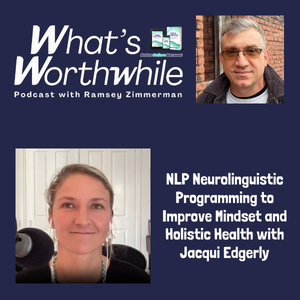
[00:01:28] Speaker B: That was Jackie Edgerly. Jackie is a functional nutritionist, clinical herbalist, and former professional skier.
She has many years experience working directly with clients to improve their health and has found that when doing all the right things doesn't move the needle, there are mental and emotional paradigms in play.
I've heard and spoken about mindset many times, but Jackie is focused on an approach called Neuro Linguistic Programming, or nlp.
I'll let Jackie give you the technical definition of NLP during the discussion, but so far as I now understand it, NLP is a way to use how we think and what we say to communicate and accomplish the things that we want and need.
Jackie works with her clients to go back earlier in their lives and identify when and how they establish deep beliefs about themselves and their health in order to empower them to establish new patterns and understandings.
If you feel stuck in some ways that you feel are not serving, you, listen on to learn all about nlp.
[00:02:38] Speaker A: Hey Jackie, how are you doing today?
[00:02:40] Speaker C: I am doing well, thank you. Thank you so much for having me here.
[00:02:46] Speaker A: Yes, absolutely. Glad that you could come and talk. When we first met and first started talking, you were telling me about neuro linguistic programming, nlp, and that's something that I had heard of but really didn't have a lot of experience with. And so looking forward to kind of talking about that and learning more all about that. But first, why don't we take. Take a minute or Two, if you could give us some more background first, how did you sort of get into this whole health space? Because I think you had a career before that as, like, a performer and an athlete. Is that right?
[00:03:29] Speaker C: Yeah. So I grew up in Colorado, and I was just born into the mountains, so naturally I was just into skiing and into all things, you know, outdoor adventure.
And so, yeah, and then it led to me becoming a professional big mountain skier. So I traveled all around the world and skied from, you know, Chile to Alaska to France, all over the place, whether it was competing or filming or shooting photos. And I did that for quite a while, maybe seven, 10 years. And then, yeah, I just got to this place where I wasn't feeling very good and I was really exhausted by the travel. I mean, I loved it. We did a lot of, like, back to back winter, so I didn't do a lot of summertime. And I honestly, I got to this place where the travel just was catching up with me and my health just started to. I just didn't, you know, feel that great.
And, you know, you're eating out a lot and we were partying hard and just everything that goes in with sort of being a.
Like, traveling around the world, and there's always events and things like that, and I just had this, like, deeper knowing that there was something sort of else.
And I always kind of was like, it felt really fun and inspiring to be a skier. And I was like, okay, this is great, because I can influence the kids and the youth to be active and get outside, which I think is so important. But. But I had this, like, deeper knowing inside that, like, I had always wanted to study plant medicine. I grew up in a family of gardeners and my mom, we were, you know, we were born and raised by a river. There was a spring there, and we were always in the garden, my sister and I.
And so I had this, like, deep love and connection to nature and to gardening and the skiing thing. Always, it kind of, like, pulled me away from that. So in the summer, sometimes I'd work as a landscape and a gardener. But I got to this point in my skiing where I just was feeling a little bit unfulfilling.
And then my health was declining. I had a lot of gut issues. I had skin stuff. My cycles were really irregular.
And I just kind of, like, bit the bullet and went to herbal medicine school because I was like, I know that there's something bigger for me.
So that's kind of how. And like, where I switched into.
Into, like, the healing space.
Yeah, it Was like a combination of my symptoms and also like this deeper knowing.
[00:06:05] Speaker A: Yeah, no, that's great. You were able to sort of follow what you had from an early age and figure that out. What, once you sort of got to school and were learning about the herbal medicines and things, did you consider yourself to be your first client and your first patient? And what was that like getting onto a healing path yourself?
[00:06:35] Speaker C: Yeah, totally. So.
Exactly. Right. We all kind of get into it usually because there's something going on with us. Right. And for me, it was like the symptoms I just stated.
And at the time too, I had also started doing aerial dance. So I grew up dancing and performing and there was just a lot going on as far as like I was putting a lot of pressure on my body and I started to sort of feel the effects of that.
And so, yeah, so when I went to herbal medicine school in Boulder and then in Oregon, I.
It was like this whole sort of realization of I knew that there was like magic, right. I knew that there was something deeper than the conventional medicine world. And because what happened is I had this really sharp gut pain, like in my lower right gut. And it was like really, it felt like a knife was stabbing me.
And so I had gone and got ultrasounds and gone to doctors and they just. It's a classic thing, like, you're normal, you're normal.
But I was like, well, I'm not normal. You know, this is really uncomfortable.
And so it was really helpful and grounding to go to a school where it was like, no, that's, you know, that's a clue and an insight and a message from your body that something's out of balance. And so it was really fun to finally be in a space, in a community where this open minded thinking and this connection to the earth and understanding, you know, stress and the nervous system, it was like just this doorway had finally opened where I felt not only inspired to learn more, but also this sense of belonging.
Sometimes in the ski industry, I felt a little bit like an outsider because I was like, I love the plants and I love. It's not, you know, I wasn't so into the bro side of the skiing.
Well, you know, it can be fun, but it was not like my deepest truth. Like, I love the natural, organic, you know, connected to nature kind of vibe. And so when I went to herbal school, it was like all.
It just felt really like I had this sense of belonging, if that makes sense.
[00:08:43] Speaker A: Yeah, no, 100%. You sort of found your people and found sort of where and what you Needed to be connected into.
[00:08:56] Speaker B: Look, we all deal with stress. Stress is not the problem.
The problem is that our body's innate stress response is built for physical challenges instead of the mostly mental, emotional, and virtual stresses that we face today. In my book, stress response, you'll learn to manage your response to stress in order to reduce anxiety, avoid burnout, and find calm and steady focus. The ebook is available on Amazon and only 99 cents for a limited time. After you download, please don't forget to leave an honest review and rating so that others will find it, too.
[00:09:34] Speaker A: But then it's always like, I always think, all right, so if all of these answers are so simple, and if it's just, you know, we eat the right foods and we do the right exercises and activities, then, and they can solve all of our problems, then why don't the pounds just melt off? And why don't, you know, why does our trouble sleeping not just go away? I mean, yeah, we can find the magic, and the magic is there, but it's usually not that simple and easy of an answer, is it? You know, there's a lot more going on.
[00:10:18] Speaker B: So what.
[00:10:19] Speaker A: What are some of those other things that you found? Because you. You made your way into starting a coaching practice, and it was based around the. The herbs and the nutrition. But was that the whole answer, or did you find more of an answer that was needed?
[00:10:35] Speaker C: Yeah. So basically, so I went to herbal school, and we did, you know, all that, like you said before, where you said, were you your first client? It's like, yes, for sure, because we had. I'll never forget, they. They gave us a list in the school I went to in Boulder.
They were very much an integrated.
They would integrate nutrition. Very, very broad, sort of integrated wellness. And so they integrated a whole nutrition piece, and they gave it. I'll never forget, they gave us a list of things to do, and it was like, eat breakfast, eat a certain amount of protein, you know, cut out refined carbs. It was like this whole list of things, and they're like, what happens in two or three weeks?
And I had been, at this point already studying herbal medicine and focusing mostly on plants as, you know, the healing modality. And when I did this exercise, I had the most dramatic change in, like, three weeks. And it was just from eating breakfast, adding protein to my breakfast. And I think it was like drinking water away from meals.
And so for me, it was like, okay, great. The plants are really important, but the nutrition is foundational. Right. Because we're doing it every single day. So I really then leaned into the nutrition and then, you know, took that on a joyride for a while. And then, you know, I got really into that and studied nutrition in nutritional therapy school.
And then of course you, you just keep peeling back the layer. So the next layer is like doing the testing where the testing can be so helpful, right? To see a map of your microbiome or an analysis of your hair, to see your minerals and heavy metals.
And so it was like I kept getting deeper and deeper and deeper. And at this point I was working with clients and seeing, you know, great success and just seeing that, yes, we are able to change.
But what I saw as a common thread through this whole time, including with myself, was like, there's certain things that weren't like you said, the sleep or maybe some people couldn't kick the weight or their digestive issues were sticking around.
And we all hear that stress is like, you know, the big evil thing, which it's kind of a obscure big thing to understand. And so you almost kind of skip over it because you're like, okay, yeah, stress, yeah, but what am I supposed to eat? What supplements am I supposed to take? And so when I really, after working with people for I think it was like five or six years, I was like, okay, there's this common thread where people are doing all the right things, but they're not getting better or they'll get, you know, maybe 60%, 80% of the way and they're stuck.
And so this is where, yeah, I think that's where we're kind of going towards where it's like, this is where our nervous system and our mindset are so huge in a healing.
I mean, not even just in healing and also in career or relationships or just like your purpose in life. This is the thing that I started to see with my clients where it's like when we actually started to work on those pieces and people started to become more aligned with their goals or their purposes and also bringing in tools of working with the mindset, it's like, wow, that was the thing that really has shifted for me. And understanding like that is like the root of the root of the root, because our mindset is what drives our behaviors, our actions, everything.
And so for me, for example, I had chronic constipation forever.
And when I finally started studying mindset and neuro linguistic programming and subconscious patterns in our just like deeper internal programming and I started to release a lot of that baggage, I actually started going to the bathroom every day. So for me, it was like this really Tangible thing I'd been working with for a really long time. And then finally, as I worked on the charge of my emotions and I worked on some of my patterning around how I was raised and how we're conditioned, just growing up in this world, I noticed this like huge kind of like jacket lifted off of me. Me where I, like, my nervous system could actually calm down because I was the type of person who was like, I. Sitting down and meditating was really hard.
Like I felt better getting up and moving.
And so I always was like, am I broken? Is there something wrong? And then I started to understand that the programs that are running in our background can keep our nervous system activated. If that makes sense.
[00:14:55] Speaker A: Yeah. So what is neuro linguistic programming or nlp? Can you give us sort of a useful functional definition? Like, what is it that we're talking about?
[00:15:09] Speaker C: Yeah, so we'll just break it down. So neuro linguistic programming.
So we say neuro, that is the nervous system or the mind.
Linguistic is language communication. And then programming is the internal programs inside of us.
And so the definition that I like to use is NLP is how we use the language of the mind to consistently achieve our specific and desired outcomes. So it's basically using how we communicate with ourself and the world to achieve what we want to achieve in our life, whether it's health, career, relationships.
And so, yeah, that's kind of how I like to sum it up. Where it's like we take what's going on in our internal programming and how can we shift that to create different behaviors, actions and outcomes?
[00:16:04] Speaker A: Okay, so what are some of those ways, like how do we communicate with ourselves? Is it. Are we literally talking about self talk or are we talking about something else?
[00:16:17] Speaker C: Yeah, so yes, self talk for sure. But a lot of this stuff is actually unconscious, so it's not like we can identify it right away. Right. So something that's unconscious is out of our awareness. And so what we do in NLP is we help people identify what the patterns are because we'll say things unconsciously that we actually don't recognize.
It's kind of like one of my mentors says, okay, there's a can of tomato soup and the client is in the can. They are the tomato soup. And the practitioner can actually read the label.
Right. So it's like having an observer to be like, I'm noticing your patterns, I'm seeing what's going on. And we can do this when we have a conversation where people will start to. Especially when you kind of. When you get into a deep conversation and you have this back and forth. We can almost trance each other out where we start just talking from an unconscious. We'll say things that are unconscious, or we'll say, well, one of the way that I love, like, I actually just got off of a client session, and we. So I often. I'm like, okay, what are we working on here? We are working. She wants to start a business.
And I'm like, okay, cool, but what's your trigger? Because often our triggers will be the thing we want to work on that might be blocking us from our goal or our desired outcome.
And so her trigger was something around her partner making her feel stupid and that she always gets something wrong. And so it took a while for us to kind of get there. But once we arrived at that belief of like, I can't get anything right, it's like, imagine living in a. In a.
Living that out as that. That's your belief. I can't do anything right.
Compared to. I am confident and I'm secure in my word.
Like, we're gonna live a very different life. So what we can do is we can actually go in and see where that came from. And so it's like basically going into the hardware of the computer and changing the programming so that we actually move through the world in a different way.
[00:18:22] Speaker A: So what are some things that NLP addresses particularly well?
Like, what are some sort of typical issues? You sort of described one. But what are some typical issues that you either see or that people have that NLP would address effectively?
[00:18:42] Speaker C: Yeah, so when I see where this really works really well is the classic person who's tried everything, right? They've, like, tried all the things.
They've cleaned up their diet, they've tried the supplements. They've, you know, even worked with maybe a functional medicine practitioner. And they still feel, whether it's, you know, gut issues or autoimmunity or they have some kind of chronic thing that's ongoing. And often that's because their nervous system isn't able to go into a parasympathetic state. So chronic stress and burnout is huge, right? Because we can help lower the stress load and we can help the person flip into a parasympathetic state. So I'm sure your listeners know because you focus a lot on this stuff. But we've got two parts of the autonomic nervous system, right? The sympathetic and the parasympathetic.
And we can't necessarily heal if we're stuck in a fight or flight sympathetic mode. So we want to help the person get into the parasympathetic state. And we can do that through calming down the programming to make the person feel safe.
And, I mean, that's the biggest thing, right, that our subconscious does. It helps us. It protects us and keeps us safe. So when we do this work, we actually help the body feel safe enough to move through and actually access that parasympathetic state. So I'm thinking, you know, chronic health issues, chronic stress, or burnout.
If someone is an overthinker, I find this can be really helpful because it can help people understand their thoughts.
So overthinking, if you're struggling with anxiety, if you're feeling really stuck or indecisive or flat in your life, like you don't know which way to go, I find it's really helpful when we. Because what NLP does that I love so much is it we focus on the person as the guide. So we help them get into a state of relaxation where they actually have the answers. So if someone's really stuck in their life or they want to pivot, whether it's in a relationship, career, or maybe they want to move somewhere new, we can help them tap into what. What is the next step?
Because it's really hard to think clearly if we're stuck in a sympathetic state.
So it helps people feeling stuck or indecisive. It also helps with repeating patterns. So if you ever have. If anyone listens, has a pattern that, like, oh, I keep doing that. Or the classic phrase is, when someone says, why does this always happen to me?
So if you ever hear someone say, or if you hear yourself say, why does this keep happening? You can think back to this conversation and be like, okay, whoa. It might just be a. Something that's programmed from potentially age 0 to 7. And then from there, it snowballed and snowballed and snowballed.
So, yeah, look out for that phrase of, why is this always happening for me? And then I think the biggest thing, too is if people. Like, for me, for example, my.
I have addiction in my family. And so where this kind of came full circle for me was when I moved to Australia, I felt really alone and isolated and just kind of like my whole world got shook up, which was the best thing ever, because it really made me do some deeper work.
But I always knew that I needed support. I just didn't know what it was. So this can really help someone who kind of has that feeling like they know they need some deeper support because they've had something really hard in their life or something that.
Or they used to think it was normal. Like, I actually never thought it was a big deal to have addiction. And then as I grew up and grew older, I was like, whoa, this has a really big impact on my programming and my nervous system. So it can really help people lighten the load of their emotional baggage.
[00:22:20] Speaker A: That's a lot.
You know, the word programming just feels like a very heavy word.
And I think there's a lot of different associations with the word programming because, you know, it can.
Programming can mean just sort of the story that is playing. Right. Like, you know, there's programming on a tv, you know, and that's like, this is what's on this channel at this time.
[00:22:50] Speaker C: Yeah.
[00:22:50] Speaker A: I love back in the day, back in the old days when TV used to have things on at certain times.
But then programming also has a connotation of something active, right. Like you're getting programmed by someone else or you are programming someone else. It has sort of a more active phrase to it. So I'm trying to think about sort of which aspect of programming I should lock into, because. Are we talking about.
And the answer is probably both. Right? We're talking about what we have experienced over the course of our life and how it's stuck within us. But then are you also talking about the therapeutic benefits of trying to change, like, trying to break certain aspects of that and change it? Like, is that what we're talking about?
[00:23:42] Speaker C: Yeah, and I love this question, actually. It really simplifies what we're doing. So. Yeah, I really love the way that you put that, because that's exactly right. We're doing both where we have programming that. So the thing is, people are like, well, nothing ever bad happened to me. And it's like, well, that's not. That's not exactly what we're. Of course we can help with something bad, Right? But it's not necessarily like every person is. So the way that we have programming is something happens, and then the person or the individual makes meaning of that thing.
So it doesn't have to be. You know, your parent didn't necessarily make you want to believe that you're doing everything wrong they might just really care about. Like, for example, that's like my dad, he. Like, he's very particular in certain things. And now that I've done a lot of work around, you know, me feeling like I'm doing something wrong, I've realized that he just really cares. Like, he just loves and has this deep passion for doing things really, really well, so the person behind the, let's say, call it programming or just life growing up like that just happens to all of us.
It's just what we make it mean.
So a lot of times people like, oh, well, nothing really happened to me. And it's like, well, that's. That's not really the point of this. It's to help you make new meaning of the world. So I love that you brought this together where it's like, yes, we can have programming. That's conditioning, right? We all have, like, conditioning of how we grew up and from society and from the media and from all the things. But also we can use certain things, even like what we do in this process where I'll blend in hypnosis after, to help the programming land. So to help simplify this in my. In my programs or with my clients, I. I bring in the concept of neuroplasticity.
So that's just the brain's ability to rewire and adapt through life. So that's just a natural thing. Like our brain can actually change. It's neuroplastic. And so this helps us to learn new skills, learn new habits, and it facilitates these shifts of mindset or personal growth. And it helps us also to recover from challenges and trauma.
And through.
So going back to the programming, through repeated thoughts and actions, we can strengthen new neural pathways. So we can call it programming, or we can also just call it a neural pathway. It's literally just the way that our brain is going to run through the wiring that's happened.
And our brain works on efficiency, right? So it's going to fire and wire what it knows to be efficient. And so when we're rewiring the brain, we have to actually lock in and kind of do some things repetitively to. It's like we've been running on a superhighway and now we're on a dirt road. It's going to take time to kind of like swap. Swap those over onto the dirt road, being a little bit of a smoother ride.
So I don't know if that answered your question, but I do love. Yes, it's like this programming or the wiring or the conditioning. And also we can use that same thing because we know that repeated thoughts and actions can strengthen neural pathways. So that can be a negative thing and it can also be a positive thing.
[00:26:52] Speaker A: Yeah.
Hey, guys, do you ever feel like you're gonna lose it? Are you doing your best?
[00:27:00] Speaker B: Showing up at work and at home for your family, but struggling tired all the time, snapping at people Hangry, restless and not sure what's going on. Well, let me tell you, you need to get Better before Burnout. I'll send you a free PDF guide and about the 12 week better before burnout journey that we can take together. Visit whatsworthwhile.net to learn more.
[00:27:22] Speaker A: Yeah, well, and of course, the other definition or connotation of programming is like with a computer, you're programming a computer using software. And if we think of our brain as the hardware and we think of all of our experiences that we go through life as writing, you know, new bits of code in our minds, then it's the familiar actions, the things that we do over and over again, the perceptions that we have, we develop kind of a shorthand, don't we, in terms of, you know, our brain wants to interpret things in a familiar way and we also want to sort of focus on the things that we want to focus on and not focus on everything all at once. And so our minds just sort of build that superhighway over time based on its experience and what it sees and what it learns. And it makes perfect sense to me that if you are going to try to build a new path, a new road, it's going to take some time, it's going to take some effort, it's going to take some input, and that's going to take some repetition.
So what are some of the ways that you work with clients in order to build those new pathways, to work with them, to see the world and experience the world differently and presumably more productively?
What are some of those modalities, if you will?
[00:28:54] Speaker C: Yeah, so there's a couple things that happen.
One really important one is, is called basically evidence. So we want to help the brain understand.
So we'll go back a second. So it's normal for us to be afraid of change, right, because it's different.
And so that's normal. Just being like. There is usually some level of fear when we're making change and that's normal. And so it helps the brain to, when we give it evidence that something's true.
So let's say someone, let's say someone has an autoimmune condition and they don't believe it's possible for them to get better, and then they meet someone who has put their autoimmunity into remission, that helps their brain go, wait, it is possible.
So in NLP, we call this evidence.
If anyone knows of 2B magnetic, she has a beautiful term called expanders. So expanders are people who you can bring into your life to help you, help your brain realize that this is possible for you. And a really, really good expander is someone who's had the same upbringing, and they've moved through the challenge that you're going through, because then your brain's like, how can it. You know, how. You can't. You can't fight against that. Like, someone has done it, that has the same upbringing, they've got the same circumstances, you know, I mean, as close to your pathway as possible. That's a beautiful evidence and expander. So that actually helps the brain in real time. So you can actually surround yourself with expanders. You can surround yourself with evidence that the thing that you're trying to accomplish is real.
So that could be in business, that could be with money, it could be with relationship. Like, let's say you grew up feeling like marriage was a jail. And then you start to see couples that actually, wow, they both do have their individual freedom or they do have. You know, so we can do this in any area of our life, but so there's that piece, like, the evidence and understanding in real time. Like, seeing. It's possible. You can do this through podcasts, you can do this through, you know, even this conversation could be an expander for someone who is stuck in their health and they can't get better or something like that. Right. So just hearing that things are possible, that's one part of it.
And then the other part of it is having conversations and asking the deeper questions of why.
Of why. And a lot of times we don't focus in. In my work, we don't focus on so much of the how. Like, how did this happen to you? Because that leads to reasons and sort of blaming where we want to figure out, like, why and what we can learn from this. So a way you can move through life to start to change your brain is just asking the questions, what can I learn from this? What am I making this mean?
And then getting the deeper understanding of, like, what can this teach me so that I can move on? So another one is you can use. Instead of thinking of something as a failure, it's just a learning. It's just feedback.
And so that's something you can do just on your own. But what we do in sort of a clinical setting is we do subconscious rewiring or subconscious reprogramming, which I use the modality of quantum time technique, which is basically we go into a subtle trance, and we just kind of guide the client into their past, and we say, okay, you know, when you have this feeling, when you have this emotion. Allow your unconscious mind to take you back into the past, and we'll, you know, the person will go back into their past. Usually it's from ages 0 to 7, we just trust wherever they go, and we see what needs healing. So the, you know, I mean, there's all sorts of different stuff, but we can work with the inner child. So people may have heard of inner child work, they may have heard of shadow work where it's like a part of us is kind of in hiding or they're ashamed or they're embarrassed, or we just need to go to that event where there's something happened. Like, I had one where I went back and I was reading and I was corrected with my reading, and I made that mean that I was a bad reader.
And, like, for. Throughout my whole life, I'm like, I can't read. I can't read. And then I'm like, wow, it connected back all the way back to when I was probably three, trying to, you know, just like, play around with words where no one was trying to do any harm, but it was just what I made that mean.
And so it's really cool. So when you allow the subconscious mind to go back to that event and say, oh, they didn't.
There was no intent or harm there. Right. It's like I actually was learning, you know, what am I making this mean? I was making it mean that I got it wrong or I do things wrong or I can't get it right.
And it's like, okay, what? And you can do this in real time, too. You can just ask yourself, what would you rather have instead? Or what would you rather be?
So even if you're in a state where you're feeling really low or uncomfortable or confused, you can just ask your brain, what would you rather? And it helps you jump to that new neural pathway. How we talked about before. There's like, the dirt road and the superhighway.
A really good phrase to use is just, what would you rather have instead? And some people will get really stumped because they've never actually thought of the positive.
So we're always asking, what would you rather have instead? And it helps their brain start jumping.
[00:34:11] Speaker A: To the new neural pathway that's really powerful. What would you rather have instead? Because it creates the idea that something better is possible.
Because maybe if you're really stuck in these patterns, you might not even know or realize that you're stuck in a pattern. And you also might not know or realize that there is a possibility for something better. So that sounds very optimistic.
[00:34:44] Speaker C: Yeah. And that's what I love. I really do. I love this work so much because it is so optimistic. And we're not, we're not dwelling on the past, we're learning from the past and then we're focusing on the future. So a lot of what we do is we just say, hey, what do you want? Like, what do you want to create in your life? And then we see what comes up after that. So I want to create.
Maybe someone wants to, you know, even like, learn how to surf.
And then they're like, but. And they have all these excuses. So then we work on the excuses. Why do you think that about yourself? Why do you think that you're not athletic? Why do you think that you don't have time? Why do, you know, we can start to sort of break up all the excuses? Because those are usually just the internal program that's keeping us safe, which it is in some sense. But also maybe someone that wants to start a practice as a coach and they are like, well, no, I don't.
[00:35:39] Speaker B: Have.
[00:35:41] Speaker C: You know, I'm not, I'm not good with managing my own time. It's like, well, wait, okay, is that true? Is that 100% true all the time? Or maybe it's like, oh, I don't have, you know, I'm not capable. That's a really, really, really big one. It's like, that's like one of the root, root, root beliefs that all of us can continue to go back to and heal is that we are capable and we can do it.
[00:36:10] Speaker A: Well, I understand that you lead a six week experience called design your life.
Is that sounds like maybe we're getting into some of the things that you do there. Is that part of the program?
What is that program all about? What's that like?
[00:36:26] Speaker C: Yeah, so basically I've been doing this sort of integrating the mindset into my work for the last couple years, and I just finally kind of landed on just a smooth process to really walk people through step by step.
And so the unblocking and the clearing, that's actually kind of the, the fourth piece of what's standing in the way. And I mean, what, what the whole process is, is basically so design your life, right? Like, how do you actually want to live? What do you want this life to be? What would you do if anything was possible?
And this work, it unfolds in layers. So it's like people can get overwhelmed when I share the framework. But I want to just invite you to know that it just unfolds in layers and that we don't have to figure everything out at once.
And the beautiful thing about this work is the more that we just lean into the resistance, the faster everything happens.
So it's really cool, right, because, like, people will run away from the resistance, but the more we lean into the fear and the guilt and the shame and the, you know, discomfort, it actually happens. And we'll. We'll get what we want faster. And so basically, there's six pillars.
The first one is to pause. So this is in any holistic health space, right? This is the most important piece. We need to pause and create awareness of what's happening. So this is dropping us into that rest and digest calm state, right? Because we actually think clearer.
And one of the big things I see through doing this work is that people's creativity comes back online, which is such a fun.
I guess you could call it side effect or benefit, where, you know, we all want to be more creative. So we want to pause and become aware because this helps us to be creative in designing our life. And then number two is we just get to know ourselves. So what are your values? What is your. I mean, I'm into astrology and human design. You can use that if that suits you. But the really, the core of number two is just getting to know who you are. Like, what do you actually.
What's important to you? So this is a very, very much like, what are your values?
Because we want to be able. We want to call in, or we want to create a life that we value, right? Because a lot of people are designing a life that they think they should.
So we want to get away from that, where it's like, no, let's actually create a life that feels really authentic and good for you.
And then the third pillar is just name the direction. So that's literally just naming your big and small desires. Like, what do you want? Just getting clear, specific. And ideally, we start with, you know, things that are reasonable within the six to 12 months. And then we keep. You can do this process over and over and over.
So we just name our direction and then we clear what's been standing in the way. So that's what we just spoke about. Like, okay, using Getting expanders, getting evidence, getting.
Doing the deeper work of the subconscious reprogramming, where we start to go back and be like, hey, where did this come from?
Where did this belief originate?
And then we take inspired action. So what would you do living?
Like, what would you do today that would already be embodying that New life, basically.
And a lot of times when we do the subconscious work, things will come out like, oh, I know I need to create that boundary with my mom, or, oh, I know I need to call that person for the interview. Or there's always some sort of thing, you. Deeper down, you know, you're like, oh, if I did that thing, I'd be just that much closer to, you know, living the life that I want.
And then the sixth phase is just the integration. Right. So this is just moving through our life with greater trust, using our triggers as a guide and always using the phrase of, like, what can I learn from this? And using.
Really stepping into the belief that. And so beliefs can be good too, right? They're not always bad. So the belief that, that. That failure is feedback. You're just learning.
And also using our emotions as, again, feedback. So when we step into that integration, we're just moving through life in a little bit of a different way where we understand that there's a cause and effect and we don't sit in the blame of things. We sit in like, okay, why did this happen? So it's like this constant state of being sort of a student of your own life.
So that's kind of the framework and what I walk people through to.
To create this next step of what people are wanting to step into, whether it's health, career, financial, relationship.
[00:40:55] Speaker A: Yeah, yeah, that sounds really great. Because I think a lot of times, if it's not us designing our life, then something, someone, circumstances, is going to design our lives for us, you know, and it probably starts at an early age with our parents and other family members, you know, and. And then it's like looking around at expectations of society or our community.
You know, you need to be successful in this way. You need to be, you know, a perfect spouse in that way. And, you know, those are things that may or may not line up with what we really want or need for ourselves.
And then that. That programming gets locked in.
[00:41:42] Speaker B: Right?
[00:41:44] Speaker C: Yeah.
[00:41:44] Speaker A: And if you're going to try to.
Yeah, go ahead.
[00:41:48] Speaker C: I was just going to say. I just. It's so true. Like, everything you just said is so.
It just lights me up so much because it's like even thinking about you and being like, okay, what, like, what do you want to do? Like, how can we make that happen? Of, like, any person I interact with them, like, I guess I see their potential.
And so I'm like, and of course you. We always see each other's potential. You wouldn't look around a room and say, like, if someone's like, oh, I'm not good enough, and then you asked. Or I'd say, hey, what do you think about this person? You're going to be like, they're definitely good enough.
And so it's really fun to. And I think sometimes we get isolated, especially in today's modern world with social media and all the things that are happening, where it's like, we can use each other to prop each other up, where it's like, no, you know, you are good enough and I see your potential. So, yeah, I just love that you rounded that out with even. Just like, yeah, if you don't design it, you're. Someone else is going to design it for you on, like, not on purpose. It's just, you know, the herd mentality. It's like, whoa. And that's the thing I think people get a little bit nervous of. Is that it. This stuff's against the grain.
And so, yeah, we're going against the grain, but it actually is super fulfilling once you break through that initial conditioning.
[00:43:05] Speaker A: And what, what grain should you have and what grain do you want? You know, you can, you can do that.
Well, so tell us, if folks want to participate in that, if they want to find you online, if they want to learn more, where should they go? Where can they find you?
[00:43:25] Speaker C: The best place is probably just go to Instagram at Jackie Edgerly.
And I mean, that's the easiest place. All the information is there. My website, too is just Jackie edgerly.com.
so that's the easiest way. You can always just, yeah, come say hi.
And there's an open door. So you can just. Yeah. Any questions, any comments? Even if this was, like, eye opening for you, I'm just, I'm so excited about this journey. And again, like, I see the possibilities for you and for anyone, it's like anything really is possible. So if anyone out there is feeling stuck or confused or lost, just know that it is possible. And you just might need to, like, find those expanders and the evidence. And it's so fun. Once you start doing this work, it just becomes easier and easier and then your brain's like, oh, okay. That road that was once really hard is like, oh, this is possible. Oh, change is possible. Now that I've achieved this one thing, now what else I could achieve? So, yeah, so it's a really exciting, exciting times.
[00:44:32] Speaker B: Yeah.
[00:44:33] Speaker A: Well, that's wonderful, Jackie. Thank you so much for being an expander for me and for the audience, I'm sure.
And, yeah, thanks for the education about NLP and for joining us today.
[00:44:47] Speaker C: Yeah, thanks so much for having me. I'm just so grateful. And I love these conversations that get us, you know, thinking bigger and thinking wider and helping us all grow and create a better planet and a better future for all of us.
[00:45:00] Speaker A: Absolutely.
[00:45:02] Speaker B: Ready for more? Visit whatsworthwhile.net to listen to podcast episodes. Master your response to stress by reading my book, Stress Response, available through Amazon, or to get better before burnout sets in by requesting the free guide.
Regardless of where you are in your.
[00:45:19] Speaker A: Journey, I'd love to hear from you.
[00:45:21] Speaker B: And talk about how we might move forward together. Please contact me, Ramsey Zimmerman through the website or on social media like Instagram, Facebook, LinkedIn, or X. Thanks.