Episode Transcript
[00:00:11] Speaker A: What's worthwhile considering what we consume, believe, say, and do towards peace of mind, vitality of body, and joy of spirit? I'm Ramsey Zimmerman. Here's some more healthy living motivation and discussion.
[00:00:31] Speaker B: I think a lot of us are actually trying to find a way of living outside of that cultural, dominative, patriarchal force. And we're like, hey, we're like all. We want to live purposeful lives, do meaningful work. We want to show up in our marriages. We want to be, you know, healthy, loving, present fathers. And we really don't have any good models on how to do that. So how about we show up together and hold each other and support one another and cultivating that and. Yeah, because there's something about the idea of, like, the men's work that is different, like, beyond maybe coaching, where there's. There isn't a real, like, agenda. There's a real willingness for, like, the truth of our experience to just be met as it is and not manipulated.
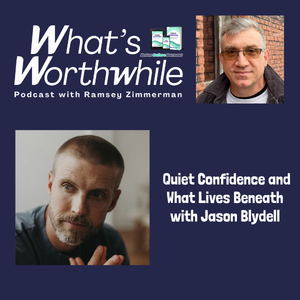
[00:01:22] Speaker A: Hey there. It's Ramsay here. That was Jason Blight Goodell. I met Jason a few months back at the men's retreat I attended at Joshua Tree. What struck me about Jason is that you look at him and you see this impressive guy with perfect lines and edges. But when I got to know him a bit, I realized there is way more going on behind that chiseled brow.
Jason is himself a men's coach, a father of four young kids, an athlete, and a Marine.
It was fun catching up with him, and we had a great conversation about what guys really think and feel below
[00:01:57] Speaker C: the surface, what men's work is all
[00:02:00] Speaker A: about, and how it breaks down the ineffective paradigms most prevalent today.
I think you will get a lot out of this discussion, too.
Let's get started.
[00:02:12] Speaker C: Hey, Jason. How are you doing today?
[00:02:14] Speaker B: I'm doing great, Ramsey. Yeah, man, it's a beautiful day here. How are you?
[00:02:19] Speaker C: Good, good, good, good. It is so great to talk to you again.
You know, we. We met at the Meld prime men's retreat in Joshua Tree earlier this year, and we had some time to hang out. I felt like we, you know, got off on the right foot to be friends, and I'm just really glad that you, you know, took the time to come and hang out with me some more and. And we could talk a bit more on the podcast. So thanks for doing that.
[00:02:46] Speaker B: Yeah, right on. I'm, yeah, glad to be here, and I've really enjoyed staying connected with some of the guys from that trip. It's super cool to keep that experience alive.
[00:02:56] Speaker C: Yeah, totally.
So I got an immediate sense of you as like, well put together, clean cut leader.
And I wonder, like, how did you come by that sense of quiet confidence?
Like, tell us more about your backstory.
[00:03:15] Speaker B: Yeah, yeah, I think first and foremost, I grew up in a sports culture.
My dad was like, pretty hardcore disciplined guy. Like, had me training in like third grade, wearing ankle weights to. To school, like underneath my pants because it would make me run faster and you know, playing in the men's league on Thursday night as a kid.
And that just became like a very natural way of like, orienting toward discipline, learning how to get better and show up. And yeah, I naturally just gravitated to, I think in my community as like, organizing sports games every week for like my whole town and bringing people together and.
Yeah, and then I just continued to do that my whole childhood and through high school. I played football and baseball at the Division 1 level in college and. And then, yeah, and then I went into the Marine Corps and that kind of continued to maybe clean me up a bit even more.
And.
But yeah, I think it's that. And then like, maybe the, the quiet confidence piece is just. Yeah. Having been like, put to at a, at a really young age, like, being able to lead in environments that like, where things real, the stakes really mattered, the mission mattered, and what does it take to show up and like, get the job done or accomplish the mission kind of became a way of being, I guess.
[00:04:54] Speaker C: And in addition, I think there's like a whole lot more to you under the surface.
You know, it's like the quiet confidence, their traditional strong male leadership, like, that stuff is awesome, but it's not all there is. You know, there's a lot more to it than that. And I think, you know, through some of the stuff that we were doing at the retreat, we were sort of learning more about, you know, how guys are, you know, have a lot kind of going on underneath and below the surface. So what else you got going on inside of you?
[00:05:34] Speaker B: Yeah, like, as you were sharing that, what made what. What came to mind was when you're like, you bring this quiet confidence. I think there's a lot of that confidence that most of my life, even today at times still, if I'm not paying attention, is that was. Is actually like a performance.
Like, I can be confident anywhere and I know how to like, put that mask on and do what it looks like to be a confident leader.
And I think under the surface is the path that I've been on or the work that I've been Up to the last, I don't know, since my son's been born, really, like seven years, almost eight years now, is realizing how much of that has been a mask and how much my own, Like, what. What is my real authentic leadership? What is confidence actually look like? Like, can I bring the part of me that feels super nervous before I stand up and speak to people and not like, shove that down and. And just like, you know, suck it down and overcome it basically? Like, I could overcome a lot of, um. So I think under the surface is like many years now of like, putting an end to that internal war so that I can get more and more comfortable of like, what it's like to just be me and show up with all of the aspects of me that I might not like or I might feel uncomfortable with or I. Or I think shouldn't be here.
And you know, in. In, yeah, just to name like, fatherhood has probably unraveled that pot more than anything in a messy but really beautiful way of healing and seeing where there was a lot of actual, like, pain and hurt beneath the surface that needed to be met.
Yeah.
[00:07:31] Speaker C: Was that difficult for you to do?
Know, what was it like, you mentioned seven years ago is when you sort of started that and you mentioned, you know, the birth of your son. What was what. What was that like? What was the. What was sort of the impetus or the sort of realizations that started heading you in that direction?
[00:07:56] Speaker B: Yeah, I think the first impetus was like, realizing that my, you know, it was like, I think my son was about 1. And on the surface I had like, everything.
A beautiful wife, amazing young son, healthy. We were living in San Diego, had a good high paying tech sales job, but, like, internally was just like, wanted to crawl out of my skin. I remember just feeling like the walls. And we lived in a little apartment, but the walls, like, felt like they were like caving in on me. And I think it was that recognition of, like, now that I'm a father, like, I cannot, I can't be dishonest. And like, the life that I was living was dishonest to who I was and what wanted to, like, be expressed through me. And, you know, it was everything from doing work that I, I hated to recognizing patterns of, like, numbing out, you know, like, using weed pretty consistently, alcohol more than I needed to be. And it was like, what am I doing, man? Like, I've got this boy here who I want to, like, teach and show. Not even teach, like, model what it looks like to be a thriving human who, like, just loves Life and is passionate about life. And that was the beginning of like, cool.
I might want to start becoming that human who, who leans into what that looks like.
[00:09:26] Speaker C: Yeah, yeah. No, it is amazing how having kids will sort of do that for us. You know, I remember when, when I was first married, we had, we didn't have kids right away. And I remember thinking to myself, you know, I need to, I need to grow up first. I need to become a grown up before I have kids.
And so then at some point I, I felt like, okay, I. I'm. I'm a grown up. And then immediately when I had kids, the first thing I did was become a kid again.
It was like I immediately started like playing with them and being goofy and ridiculous again.
And it just seemed like such a paradox, you know?
I agree. It's like when we have kids, they really change our perspectives on just about everything.
[00:10:20] Speaker B: Yeah.
Yeah. I love that, man. And hearing you say that, I'm kind of like, God damn, I wish I tapped in. I could. That. That was like that. That is. Those are the ways that I feel the war inside of me internally where like, oh, man, I've got these four wonderful children running around my backyard and I can't be playful.
I can't.
[00:10:39] Speaker C: Why do you think that is?
[00:10:41] Speaker B: Like, I. I think it just points to the parts of me that are just like consuming so much energy elsewhere and hung up on all these things that don't actually matter.
And I can't just like let everything go and be with them here now.
And. Yeah, I don't know, like, why? Like, I think there is. There's just an aspect of that pattern that shows up for me that's like, everything feels like it's work.
So even fatherhood is like, oh man, here's another job I have to go do and be good at and perform at a high level. And it's like, well, that's.
Or you could just like orient toward getting this like, beautiful opportunity to be their father. And what would that look like? To just be with them and not have to do anything special, not have to like raise them or shape them, but just be really present with them.
So, yeah, when I notice that, when I notice those things, it just invites me back to like, cool. Here's an opportunity to actually like, put down your stuff or maybe like, cool. And, you know, now I've got a better sense of like my process to kind of unravel things and let some stuff go and move some of that stuff internally so that I can just come back to being with them and soaking. Soaking up.
Your kids are older, right, if I recall?
[00:12:18] Speaker C: Yeah, yeah. They're like college age, basically.
[00:12:21] Speaker B: So, like, I know, you know, like, the. It's. It is hard. Like, it is not easy to have four kids under seven. And, like, I will never have this again.
And there's.
[00:12:31] Speaker C: I will never know what it's like to have four kids under seven.
[00:12:36] Speaker B: Yeah, it's like, it's a great thing that you probably don't need to know that. And. Yeah, like, it invites me into a lot of possibility to continuously transform.
[00:12:46] Speaker C: Yeah.
[00:12:46] Speaker B: Yeah.
[00:12:47] Speaker C: Well, that's. That's awesome.
You know, in terms of transforming.
What was that Joshua Tree retreat like for you? Like, how did you experience it? What did you. What did you learn from that?
[00:13:06] Speaker B: Yeah, for me, it was.
I had. I. At that point, I'd already done a lot of a group work. I'd been in some really, like, you know, healing, transformational coaching type spaces or containers where there was a lot of, like, depth and openness and beauty, all sorts of goodness. Right. But I had never been in a space in person physically, yet with all men.
And I think for me, the first thing that comes to mind is just, like, being able to, like, immediately drop my guard and reveal what was true for me and, like, the hurt that was bubbling up and the pain that was there and what it was. Who knows why it was bubbling up. I don't know, but I could just let it be there and for it to be met, supported, guided. And then, like, I just remember, like, sitting. I don't know if you remember that first, like, kind of circle and just opening my eyes after, you know, really processing a lot of hurt and looking around and, like, taking in every single man and seeing other men being, like, touched by my experience would, like, touch me even more.
And, yeah, I think I was just really blown away by how beautiful it is to be with a bunch of men, like, where we're so deeply present to one another without needing to, like, change anything or fix anything to just hold that.
[00:14:44] Speaker C: It was.
[00:14:45] Speaker B: Yeah, yeah, it was just.
[00:14:46] Speaker C: Yeah, it was really.
I had never been in a space like that either where there was, what, 30 of us, you know, sitting around.
[00:14:55] Speaker B: There's a lot of guys. Yeah.
[00:14:58] Speaker C: Typically when my experience is when I'm in a group of more than about five people, I have a lot of difficulty staying well, a lot of difficulty contributing in any meaningful way.
And it's usually because there's feelings of, like, competition or there's, like, people that clearly want to talk more. And so you Know, I'm not gonna compete with somebody who just really wants to talk, so I'm just gonna let them talk.
Or it's like, I have a sense of, you know, there could be anybody in this room, you know, and so that's not a feeling of safety. But, know, we. We went to such great lengths in that retreat to create a space of safety and to, you know, break down walls and drop our guard, you know, during the mother of all icebreakers that we did the first night when we got there.
So when we were sitting and actually in that circle and literally taking the time to look around in everybody's eyes and that. Yeah, that was an amazing sort of supportive experience.
And it's difficult to imagine how you could get that kind of experience in kind of your everyday situations or, you know, meetings or, you know, places where you would normally have 30 people in a room, because there's usually a lot more going on in a room like that, and it's not necessarily all safe.
[00:16:44] Speaker B: Yeah.
Yeah.
[00:16:47] Speaker C: There's, like.
[00:16:48] Speaker B: Yeah. When you, like, just remembering, like, the fact that there was 30 guys there is pretty wild. Like, and how quickly 30 guys can.
Yeah, I think that's what really amazed me is, like, how quickly 30 men can slow down and.
And actually be connected to one another.
Like, how quickly. Like, a lot of the stuff. You know, I'm sure a lot of us in all sorts of different ways were still armored and protecting, but. But for the most part, like, you know, within, like, two to six hours, if you really think about it, like, that first night into the next morning, like, there was a.
Yeah, there was a real, like, ability for men to just share what was on their heart and on their mind in a way that could just be met and received. And.
And it was pretty potent. And, yeah, like you were saying, there was, like, a.
For 30 people, you'd be like, oh, there's not enough time for anyone to talk or share.
But there was. There was, like, beyond enough time.
It actually felt like. Which is pretty wild, too. Yeah, like, things really slowed down.
[00:18:01] Speaker A: Look, we all deal with stress. Stress is not the problem.
The problem is that our body's innate stress response is built for physical challenges instead of the mostly mental, emotional, and virtual stresses that we face today. In my book, Stress Response, you'll learn to manage your response to stress in order to reduce anxiety, avoid burnout, and find calm and steady focus. The ebook is available on Amazon and only 99 cents for unlimited time. After you download, please don't forget to leave an honest review and rating so that others will find it too.
[00:18:38] Speaker C: And they encouraged us to connect with each other afterwards. They encouraged us to do, you know, more follow on work.
And what kinds of things have you been doing since then?
[00:18:56] Speaker B: Yeah, like at a hike planned with one of the guys from our group in a. In a few weeks, actually, in North Carolina. So pretty stoked on that.
So just keeping that relationship and connection alive. He's like three hours from me, so. Yeah, well, I just want to name that because it's like a real commitment to not letting some of these relationships just, like, die on the vine. It's so easy to happen.
And then. And then, yeah, I was just really, like, struck by the potency of men coming together in community and what becomes possible. And I. I did. I've been doing. I did two more retreats, really orienting towards, like. Yeah, how. What does it mean to be a guide for other men as we navigate all these different thresholds in our lives that we're navigating and to bring some shared reverence to, like, our human experience?
And like, inside of this work, how do we find our natural expression of, you know, like, anyone listening, I don't know. They might have no idea, like, what men's work is. Most people in my world don't have any clue what the hell men's work is. And. And honestly, I'm, you know, like, I have enough of it now where I'm like, okay, I get it. But it's like, what. What is actually happening if we look at it really simply is like, oh, my God, men are coming together. There's a real, true connection.
There's intimacy.
There's like a slowing down.
And it's so simple. And how. And. And there's like a yearning for all of us to want to feel connected, intimate, to feel loved. And that happened. That can happen in. In that shared space so quickly and simply. So it's like, how do I. So what I've been up to is kind of like, orienting to how do I find my expression of leadership to create that same.
To create experiences that allow that to be possible.
That simple structure. Yeah.
[00:20:57] Speaker C: You know, I. It. It strikes me that, you know, we talk about men's work, we call this thing called men's work.
And I just wonder, you know, what kind of impressions or connotations people take from it, because, you know, the last thing that we want to be is exclusive.
We. It's not that women don't have work to do. It's not that women don't deserve and have the value and need to be together in their spaces and work. And it's not even that we as men want to not have women in our spaces.
In fact, it's a lot. It's very much kind of the opposite of that. It seems like whenever. Oftentimes when we get together as men, we're often talking about the women in our lives and how to serve them better and how to be better men kind of for their benefit.
You know, that's not the only things we talk about, but often it seems like it is.
And then this other notion of, okay, men's work, you know, is that either.
Is that the sort of, you know, domineering alpha male who wants to take control of everything, or is that the obsequiant, you know, kind of man who wants to, you know, do everything that society and as women, his woman, you know, tells him to do?
Or is it something in between or is it something completely different?
[00:22:37] Speaker B: You.
[00:22:38] Speaker C: What, what do you think? Talk. Talk to me more about this thing called men's work.
[00:22:43] Speaker B: Yeah, I mean, that's my experience of it has been, like, holy. There's a bunch of, like, really good and beautiful men out in the world who all have, like, these huge hearts and care deeply about things that matter. And.
And we're all, like, coming together to find our way back to, like, how do we orient towards these things that matter? Like, and. And. And we're all, in a. In a sense, looking for help around all these things that are innately, like, human. But for men in our culture, like, have been completely left by the wayside, like, our, you know, capacity to feel our emotions or to be able to speak authentically to what's true to us without, you know, being and not needing to perform and look a certain way so you can fit in or whatever. So it's like we're all actually coming together to look for the same thing. And there's just been this, like.
To what you're naming the exact opposite of this, like, you know, alpha male domination. I think a lot of us are actually trying to find a way of living outside of that cultural, dominative, patriarchal force. And we're like, hey, we're like all, like, we want to live purposeful lives, do meaningful work. We want to show up in our marriages. We want to be, you know, healthy, loving, present fathers. And we really don't have any good models on how to do that.
So how about we show up together and hold each other and support one another in cultivating that and. Yeah, yeah, because there's something about the, the idea of like the men's work that is different, A bit different. That's important to name. That's like beyond maybe coaching where there's, there isn't a real like agenda.
There's a real willingness for like the, the truth of our experience to just be met as it is and not manipulated, I guess.
[00:24:50] Speaker C: Right, right. Because coaching is very much oriented around specific goals, things that people want to accomplish kind of within their life.
Right. And versus this is more sort of existential.
[00:25:05] Speaker B: Yeah. And I think like healthy coaching can do both. Right. But. But they're also.
It's so easy to get sucked back into like you know, like another thing to achieve or that there's actually something wrong instead of like no, like this can you actually feel your life the way it is. And when we do that and we can be with our experience like there's a natural unfolding of our innate capacity or what we know is true or how we want to navigate something beyond like, I guess I would say like the intensity of my own programming, my own parts that are so strong and can just be like, can be like let down and.
Yeah, yeah.
[00:25:57] Speaker C: So I'm getting more personally involved with group work.
I've got, I've joined a weekly men's group online to, to do that and I've also am now facilitating a weekly in person group which is not just men, it's men and women around holistic health.
And you know, I've done a lot of group facilitation in the past, but it's always been in a business setting. So you know, coming into a business group and, or running a meeting or doing strategic planning.
This is a, a bit of a new thing for me leading a kind of a group in this format.
So know, I'm thinking about things like leadership and you know, wondering what kind of thoughts or advice you might have for me both as I, you know, participate in this weekly group online and also as I facilitate this other in person group.
[00:27:12] Speaker B: Yeah, well one. That's amazing, man. Congrats on leading into all that. And yeah, stepping into all those spaces feels exciting.
And the thing that comes up for me is like how powerful it can be. Like there's this, I think an idea that I've always been present to like, you know, especially in the military is like we've got to know everything like the tactics, the strategy and, and how beautiful it can be to like step into leadership. Really not knowing how the hell works, like how this is going to go or what's going to work. And, like, to really be open in that and to be willing to share. Like, hey, I'm trying something new.
Or, like, our capacity to lean into something. To really not know, to own that and to be someone who's willing to just, like, still go for it, to commit and, like, put it all out on the table and be like, oh, cool. And I can. Hey, I can clean up any mess that I make. I can.
I have the. The capacity to repair is so much more potent than, like, needing to be someone who, like, does it right or gets it right or, like, it goes perfect the first time. Like, people. Like, my sense is that what people are actually craving, what men are actually craving is for, like, to be led by men who can. Are just real like them.
Like, they haven't, like, actually figured it out or they don't actually, like, have it all together. Because that's not actually true or real real for any of us. Like, we're all humans.
Like, yeah.
[00:28:48] Speaker C: Nothing ever.
Nothing ever goes completely to plan or write the first time, if. Or the second or any time.
[00:28:55] Speaker B: Yeah.
[00:28:56] Speaker C: Yeah.
You never know everything.
[00:29:00] Speaker B: Yeah.
[00:29:01] Speaker C: You know, and so you can pretend like you know everything and, you know, sometimes you can fake it and get away with it, but, you know, that's usually. Usually that. Well, that has a great potential to blow up in your face, you know, claiming that you know everything.
[00:29:15] Speaker B: Yeah. Blow up in your face. And I believe that it's also, like, felt as, like, an incoherence in the space. Like, when I'm here with Ramsey leading from that place, something feels off.
I might not be able, as a man in that group, Like, I might not be able to name. Like, most people couldn't. Wouldn't name it or couldn't name what they're feeling specifically, but there's, like, it would actually be felt as, like, a dissonance.
[00:29:46] Speaker C: Sure. Yeah. Because it wouldn't be true. It wouldn't be real. Yeah. People can sense truth.
[00:29:51] Speaker B: People sense it. And, yeah, that. So that goes back to, like, what I was saying around, like, how beautiful it is for somebody to just show up and, like, be their messy, beautiful self who does not have it all figured out.
But. But also, like, that doesn't mean we can't be like, hey, man, I got a great plan. I showed up. I'm excited about it. And, like, five minutes in, be like, oh, this does not feel like it's going well, you know, like, being able to check in and tune in and, like, really work.
Work inside of, like, the present moment, experience.
Like, how cool is that to like model that possibility for people.
[00:30:35] Speaker C: Yeah, there's a lot to just being present and staying present and really sort of paying attention and trying to lock in on what people are really saying and also what their body is expressing and figuring out kind of the story behind the story, understanding. And I guess we talk a lot about creating a container and holding space, you know, so creating a container meaning the.
The place and the situation and the kind of ground rules and agreements into which we have a meeting or a discussion.
And then even if somebody says something weird, even if they have a strong reaction, you know, even if it seems like things are going sideways, stay in there, Stay in it with them and sort of work through it and observe it and help the person to have that experience.
You know, it's a physical, mental, spiritual experience.
And having that experience with another person in relationship allows someone to have it be a full.
You know, have it develop. And actually they can experience that instead of denying it or pushing it down or, you know, pretending like it didn't happen or moving on to the next thing because then it's just unresolved.
[00:32:21] Speaker B: Yeah. Yeah. Like, when I'm. As I'm listening to you talk about that whole. I'm just like, oh, yeah, like, this is the potency or the power of, like, when we come together and just be honest.
Like, I'm honest with what I'm feeling and thinking and noticing, and you're honest with what you're feeling, thinking and noticing. And like, that gets to stay in the space and doesn't need to be made wrong or change.
And.
And we can explore that and, like, we don't need to be.
Yeah. And like, for. I think it's like, there's an aspect of.
Culturally, for men, like, we're. We're moving at such a fat, like, disregulation in men, high achievement or like the high performance aspect is like.
It almost feels like something's falling apart as soon as we slow down and stay with, like, what's here. And it's like, oh, yeah, no, we can actually stay safe and stay right here and not go anywhere. And this matters, right? Does it matter? I don't know. Let's find out.
Yeah.
[00:33:34] Speaker C: You know, I've heard you mentioned previously, how important is the capacity to choose?
Tell me more about that. What. What do you mean by that? And why is it so important for people to. To be able to. To make choices and to actively choose?
[00:33:58] Speaker B: Yeah, I mean, I think it's like I've been. I've been. Yeah, I've been curious about this myself lately. And I think, like, deep down there's a yearning for all of us to want to know that we have the capacity to choose how we navigate light and that in. In front, choose how we navigate life. And from that place we can actually create the things that we want in our lives and to be able to create the experiences we want, the material success, whatever it looks like, whatever the things that. To be able to create the beautiful life we want with our family, as a dad, as a husband, in our marriage, like, we want to know that we can create that and to create that. It starts with our ability to choose.
How do I start to make choices that lead to that experience?
So like, if I want to have a loving and intimate marriage, like, how can I catch myself and notice the ways that I'm reacting or choosing that don't actually orient me towards creating that?
And I think, like, for a lot of us, it's like, I know for me, like it became a problem. Like, holy. I don't. I can't. It feels like I can't choose to be this way with my kids certain times, or I can't put down this story about how to make more money in my business and how natural that is. I think like all these things in our life are just pointing to, are just actually all the things we're fighting and resisting and can't stand about our life are just doorways into. Oh, these are actually doorways into what it looks like to have access to start to choose again.
And.
Yeah, yeah, I'll pause here.
[00:35:41] Speaker C: It seems like that is the first aspect of regaining some kind of control.
You know, everybody wants to have at least a certain amount of control.
You know, we certainly want to have control over our own selves.
You know, in certain situations, you want to have more control over a larger situation. And.
But the first ability to have any form of self control or autonomy or agency is to be able to make a decision, you know, whether or not you even have an action tied to that decision. The first thing that you need to do in that case is actually make a conscious decision about even what it is that you want or that you think you might ask for, that you might do?
[00:36:40] Speaker B: Yeah, yeah. And you can keep peeling layers on that all day long because like, okay, what happens when someone has a part of them that doesn't know what they want and feels like that's not true? And then, so how do we, where do we go? And this is where I start to look at, like, choices is simple, but it's Actually complex in the sense of we got to know, like, what layer to work at. So, like, if I'm struggling to make these choices about how I want to show up as a dad or how I want to lead my business, when things get tense and there's friction, I have to understand, like, where I'm actually blocked. So, like, layer one would be, like, nervous system capacity. So a lot of the work we did on our trip to Joshua Tree, it was like, can my body actually hold this? And how do I even. Like, before anything can shift, like, does my system have enough regulation for change to even be possible?
So a lot of people are, like, beating themselves up and we're struggling and we're creating shame loops because we're not making the choices we want, but it. We can't get there yet.
Like, we have to make the choice to, like, hey, I'm actually going to choose to slow down and attune to my nervous system and what does that look like? To take care of my body?
[00:37:51] Speaker C: I'm going to choose to, you know, eat.
Eat a healthy snack versus, you know, go binge something else. Or I'm going to choose to drink a glass of water instead of another couple more beers.
[00:38:08] Speaker B: Yeah.
[00:38:08] Speaker C: You know, those are choices that many of us struggle with in the moment. Right. Even though we know which would be better.
And then each time that we make a good decision in that capacity, it improves our base level of function and it gives us some momentum. And then those choices are actually potentially easier to make the right decisions the next time.
[00:38:41] Speaker B: Yeah. Yeah. What you just named is, like, what I. The distinction I use is, like, intellectual awareness does not equal embodied knowing.
[00:38:48] Speaker C: Yeah.
[00:38:48] Speaker B: And, like, if we.
A lot of us have that intellectual, we can, like, look at our patterns. And a lot of us have done enough work to like, analyze some things and. Oh, yeah, I know I shouldn't have another beer. I know I should drink. Ramsey told me, like, all the things that I need to eat. He gave me this whole amazing program that I paid all this money for. But embodied knowing is the ability to feel it arriving in real time and have, like, a moment of genuine choice before that old pattern, that wiring that's so deep takes over and grabs the beer or the chips or whatever, or yells at our kids.
And very. Like, many of us have done that first layer, but most of us haven't built that second layer. And the second is what I think, like, where change is what actually is required for, like, sustainable change to occur, where we start to feel it arrive and we start to Understand how do I work across all these different layers?
[00:39:46] Speaker C: What is that second layer and how do you build it?
[00:39:49] Speaker B: Yeah. So the second layer, I would say, is relational safety.
So, like, is it safe to be seen here when I fall short?
Or if it's just Ramsey on my own, I eat the chips and I fell short, and now I'm in a pattern of, like, critique and in a shame loop, and I just spiral.
And the setbacks just, like, kind of keep me in the. In the same loop, or I pull. I pull away from support when I actually need it most. So if there's this. Relational safety is built now, I can be met with someone who can meet my experience in a way that has never been met before, where it's like, hey, man, it's falling off is okay.
They can still be met with the warmth. They can feel, what it feels like to be curious about that, for it to be. For it to be accepted, for them not to be shamed. And it's like, wow, this is really potent. So that relational field starts to become their own internal field.
They start to learn, like, what they learn in relationship, what they can apply to themselves in their own relationship to themselves.
[00:41:00] Speaker C: Yeah.
[00:41:00] Speaker B: Which is really a beautiful thing.
[00:41:03] Speaker C: Yeah. That is important and profound because in a lot of ways, the primary sort of connection or interaction that many people have today is through things like social media.
And often on social media, we're going to extremes, Right. We're either bragging about how great our thing went or, you know, how cute our kids are, or else we're complaining viciously about what somebody else is doing that we don't like.
[00:41:42] Speaker B: Yeah.
[00:41:43] Speaker C: You know, but here, like, I'm hearing you describe a space where people are, you know, they might send a note out and be like, you know what? I just ate another bag of chips, and I don't even know why.
[00:41:58] Speaker B: Yeah.
[00:41:59] Speaker C: But I just did it.
[00:42:01] Speaker B: Yeah. I had a mentor who.
And inside of a group container of a lot of people, I actually didn't really know that well, where I celebrated every time I got angry at my kids, and everyone would send out emojis, and it was like, this is weird, and kind of effed up. Right? I'm like, what, dude? Like, yeah, this is terrible. But it really taught me how to embrace my anger as being okay. Like, if I can't. If that can't be accepted, it can never actually transform.
Because as long as, like, the. If the shame follows the falling off and we. And I feel the need to perform competence and even the relationships where people are supporting Me, there's no mechanism for real change to occur.
So if I could meet myself and, and share with others like this genuine sense of, and it be met without judgment, then I was like, wow, it actually is okay. Like, I'm not bad, I'm not wrong. I'm not a terrible person. And I, and I'm gonna, and I think that's the reality, I think of change where, you know, someone might come by my house depending on most days. But most of the time if you witness me out, like, you'd be like, wow, you're a good dad, man.
Like, you speak to your kids in like a really loving way. And you, I can tell you're like, you're being patient and gentle, but that it's taken so many reps, so many times, I've fell down that if I didn't allow that to be the process, like I'd, I'd still be in that internal war. And I get. And it still happens. So it's still, it's, it is an endless process. You know, my youngest is two and I'm like, oh, I forgot what it was like to have a two year old.
I'm like twisted up.
[00:43:38] Speaker C: Yeah, you're, you're in the thick of it. You're still in the thick of it. Yeah.
[00:43:42] Speaker B: And it's like, oh, then I got a puppy. And I'm like, oh, yeah, let's make this even more fun.
[00:43:46] Speaker C: Oh yeah, whole nother level.
Well, no, see, when you get to the point where, you know, the puppy can change the diapers, you know, then you'd be in good shape.
[00:43:58] Speaker B: Yeah, I'm working on that, man. We're, we're in layer four there. Um, I'll let you know how it goes.
[00:44:05] Speaker C: Oh, man.
Well, hey, if folks wanted to learn more about what you do as a coach and just get in touch with you as a person, like, where would they go to learn more and how can they get in touch with you?
[00:44:21] Speaker B: Yeah, you could find me on LinkedIn probably really easily, Jason Blidel.
Or my website is www.gonebeyond.co and yeah, in my email is just jason.blydellgmail.com. so yeah, you can just reach out to me there. Probably the easiest way.
[00:44:43] Speaker C: Jason, it was so much fun to hang out with you for a little while today and let's keep in touch and thanks for all of your insights. It's good and helpful for me and I know it'll be helpful for our listeners too.
[00:44:59] Speaker B: Yeah, right on, man. Thanks, Ramsey. Appreciate you. Glad to be here.
[00:45:04] Speaker A: Ready for more? Visit whatsworthwhile.net to listen to podcast episodes. Master your response to stress by reading my book, Stress Response, available through Amazon, or to get better before burnout sets in by requesting the free guide. Regardless of where you are in your journey, I'd love to hear from you you and talk about how we might move forward together. Please contact me, Ramsey Zimmerman through the website or on social media like Instagram, Facebook, LinkedIn or X. Thanks.