Episode Transcript
[00:00:11] Speaker A: What's worthwhile considering what we consume, believe, say and do towards peace of mind, vitality of body and joy of spirit? I'm Ramsey Zimmerman. Here's some more healthy living motivation and discussion.
[00:00:32] Speaker B: As humans, we need rest, we need downtime, our brains need to have that reset time. And without that, we are just going to be running on fumes. And so we do our best, most creative work, our most productive work when we come from a place of rest.
And then you'll get more concentrated, maybe, but focused and high quality work during those hours that an employee is engaged. I come in and I look at the culture of the company and we're working to change that from a health standpoint while keeping the roots of the individual culture of that company, obviously. But from a health standpoint, we're changing the environment and we do this in two ways, physically to some extent. So I'll encourage things like let's swap out that candy bowl or fruit bowl or let's see if we can do a walking meeting instead of just being stagnant all the time. Let's see if we can bring some standing desks in. But, but then secondarily, the communal environment makes a huge difference. So if we can change that culture, then that's super impactful.
[00:01:33] Speaker A: Hey there, it's Ramsey here.
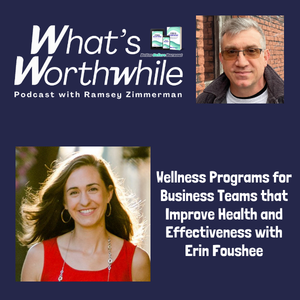
That was Aaron Fouche. Aaron is a functional nutritional therapy practitioner who is passionate about strengthening business leaders and their teams.
She leads dynamic workplace wellness programs which center around a series of engaging live workshops for team members.
In our conversation, Erin gave me a good sense of how she makes complex health concepts understandable and actionable for team members.
Erin also has a special offer for us which is linked in the show notes. So be sure to listen to the end to get that coupon code. Let's jump in.
Hey, Aaron, how are you doing today?
[00:02:22] Speaker B: I'm doing great, Ramsey. It's great to be here.
[00:02:25] Speaker A: Yes. Well, thanks for joining me today.
You are a seasoned professional health coach. You've taught nutritional therapy to future ntps and you often work with business groups. And I'm particularly interested in speaking with you today about reaching people through their employers.
Welcome to what's worthwhile.
[00:02:47] Speaker B: Thank you.
[00:02:49] Speaker A: Yeah, let's, let's start with a little bit about your background.
I understand you've been in the health space for about 17 years or so.
What got you interested in health and wellness in the first place?
[00:03:05] Speaker B: I've got to give a lot of credit to my mom. She had a best friend who started telling her all about this traditional health information and then before long, she was a drop off site at for a bunch of meat from this guy, this farmer called Joel Salatin, who some of you guys may know that name now, but back then he was this unknown farmer. And so before long, we started getting raw milk on our table, this amazing meat. We had backyard chickens. And so it kind of went from there and, and grew. Before long, my mom was reading a lot about traditional eating, so we had books in the house. The Wise Tradition, Weston A. Price Journal. And so instead of reading through Teen Vogues and stuff, I was spending my time going through Weston A. Price journals and reading these health books. And it fascinated me. I absolutely loved it. And as a competitive athlete, I saw how impactful food was in terms of my performance.
So that really got me hooked and started implementing things in my own life from a health standpoint, seeing positive results. And although then it was really fueled by this competitive edge and wanting to have high performance, that desire for performance still fuels what I do now. From a standpoint of helping others. I think we each have a unique mission that has been given to us.
And that might be small behind closed doors, or it might be big and loud, but regardless, if we have more bandwidth because our health is strong and robust, man, we can attack that mission in such a different, beautiful way. And so my goal is always to help people to increase their capacity, to be the best version of themselves. And it really started back then as a young athlete, just seeing how much of an impact it made on me.
[00:04:53] Speaker A: Yeah, well, that's really beautiful. What sport were you, were you competing in?
[00:04:58] Speaker B: So basketball was my primary sport, but I, I was at a school where you were allowed to play multiple sports. So I played soccer, volleyball and basketball in high school. And then I was a, a runner when I was young.
[00:05:09] Speaker A: Great.
And were you always headed into nutrition as a profession or did you have some other professional sort of work in between?
[00:05:22] Speaker B: So I had a mix of work. I loved work. I was always very entrepreneurial. In high school, I started a swim lesson business, taught hundreds of kids, and knew I wanted to work with people. So that was really impactful in that way.
And then during college, I started working as a personal trainer and a group trainer, and that got my toe into the wellness industry and so helped that job, helped to fund my college expenses, then went on to nutrition school. And during that time too, I was also playing with the whole political realm too. And my thought was to take nutrition and public policy, bring the two together and impact the world in that way, and decided I really wanted to work More individually with people and with groups of people as opposed to in the policy realm. But it's an area I still love and has impacted me just in terms of how I even see working with groups being in this, you know, in a collective environment. It can help people to.
Yeah. To make changes in a positive way.
[00:06:23] Speaker A: Yeah. Well, I'm really interested in the notion of, you know, working within a group in order to improve people's health. So that's definitely something that I want to really dig into.
But first, why don't we talk a bit about sort of what are some of the major common health challenges that people face? People who, you know, work in an office all day or work in their home office all day, you know, that kind of professional. What are some of their. One of the main common health challenges that they face?
[00:07:03] Speaker B: Yeah, it's a great question. I think that it's really challenging today because we are putting ourselves in kind of an artificial environment for the large majority of the day. And not only are we inside instead of getting this, you know, natural light typically, but we're also oftentimes sitting right in front of a screen.
So our movement is not necessarily conducive to good health when we're sitting all day. So there's a lot of things just from our environment standpoint that can be challenging for the office worker. Oftentimes, if we're in a regular environment, maybe there's food around that's not super healthy. But then on top of that, we're in a new era of. Of work where we can bring our work home with us on our cell phones and it's constantly with us. So if we're not turning off those notifications, there's a stress element that affects us from a health standpoint where if we're constantly getting those notifications, it makes such a difference in terms of how our body is reacting, because we never can get into that off mode, which we really need for optimal health. I had a CEO, and he was working on his health. He was doing a great job with nutrition, he was working out, but he still had this kind of a little bit distended belly, like a quarter old belly is what I call it. And I was asking him, what's going on with your kind of home routine? What does your morning look like?
Because I think there's some stress going on that we need to try to reduce. And the first thing he did, he sat next to his. Or he slept next to his phone that had work notifications on all throughout the night.
So that had Sometimes, you know, if he couldn't sleep, he'd get on that. And then first thing in the morning, his very first thing that he would do is turn over in bed, not even get out of bed. And, and he'd be going through work emails and thinking about how he's going to put these fires out at work. And so even just giving ourselves a little bit of detachment from that, some boundaries can make a big difference because again, we're in a unprecedented, stressful environment just because work can come home with us, can go everywhere with us.
[00:09:00] Speaker A: Well, but that's great, right? Isn't it great that we can always get things done? I'm sure that businesses think that it is really effective to have their employees be productive 24 7.
But instead, are there some downsides to that? Like what is the, what's the benefit to companies for their people to actually catch a break?
[00:09:29] Speaker B: As humans, we need rest, we need downtime, our brains need to have that reset time. And without that, we are just going to be running on fumes. And so we do our best, most creative work, our most productive work when we come from a place of rest.
And so we need that time to recharge.
And then you'll get more concentrated, maybe, but focused and high quality work during those hours that an employee is engaged. And so it seems like, yes, if you broaden the access to that employee, it's just gonna be great. But there are downsides for sure.
[00:10:04] Speaker A: Yeah.
Well, so I understand you provide a variety of different services, but among them are, you know, working with, with business groups.
You know, I've been in a variety of kind of small to medium sized organizations throughout the years and I've seen and recalled a variety of offerings through our employee assistance programs.
Um, but I gotta say, it didn't seem like we were often sort of paying attention to that or, you know, taking it too seriously, unless somebody had a really significant issue and just really needed to work on that.
But how does your approach to working with businesses make like a, you know, a significant widespread impact on a team?
[00:10:59] Speaker B: Yeah, I think that's a pretty common thing in terms of a lot of wellness programs. It might be a quiz or a little check this thing off and do this little thing. But in terms of how it actually impacts the individual, is it creating real change? And oftentimes it's not. So I come in and I look at the culture of the company and we're working to change that from a health standpoint while keeping the roots of the individual culture of that company, obviously. But From a health standpoint, we're changing the environment, and we do this in two ways. Physically, to some extent. So I'll encourage things like, let's swap out that fruit, that candy bowl or fruit bowl, or let's see if we can do a walking meeting instead of just being stagnant all the time. Let's see if we can bring some standing desks in. So there's some little things that we can do there with the physical environment. But then secondarily, the communal environment makes a huge difference. So if we can change that culture, then that's super impactful. So we do this in a variety of ways.
So first, going to be coming in with educational workshops that are fun, that are live. If I'm working with a company remotely, they're still live on a zoom call. Otherwise, I'm in person. We're bringing people together, and that makes a big difference. We're meant to be in community, so it's a lot easier to do hard things when we're in community. So doing that, making it fun, making it exciting.
And then once we learn all these things about digestion and sleep and blood sugar regulation, they have challenges where they take that information learned, then they go and apply it, and they get little points and stuff for that, both as individuals and teams. So, again, it's making it fun, but it's also helping them to take that information and actually apply it, versus just having it come in one ear and out the other, which so often happens. Yeah, we read this little thing. Okay, got it. But are we actually applying it? Are we doing the hard work?
And so that makes a big difference in terms of the results.
We also help to get that community going by making sure people are leaning on each other in a fun way. So, you know, everybody knows. After the digestion workshop, Kevin went out and got an apple cider vinegar bottle that's raw. And so people are going and taking shots of that before their meals to help to stimulate their digestive fire. It can be little fun, silly things like that, but it creates this community where people are having positive peer pressure. Oh, McDonald's came in. Oh, what's Aaron gonna say about that? McDonald's just keeping it fun, keeping it lively, but it changes the environment when everybody is working on something together. And a lot of these people, they don't have that support at home. So when they have a community that's rallying behind them and encouraging them to implement these health habits at work, they're drawn to that, and they want to be in that positive uplifting environment. And so rather than work being kind of this negative place, now they have this fun thing to kind of rally around. Apart from work itself, which is always.
[00:13:50] Speaker A: Great, is there any.
Is there any danger of, you know, getting too personal or embarrassing? I mean, this is really kind of personal stuff. How do you navigate that?
[00:14:05] Speaker B: It is very personal. Yeah, it's. It's a good question. And so when I'm doing educational work, maybe we're talking about digestion. And so I'll say, what are some negative digestive symptoms that people could have? Not you as an individual. People could have just even how we phrase the questions, it takes the pressure off of the individual. But then they, in their head can think about, okay, how does this apply to me versus me calling them out? So there's this detachment from the individual person from a symptom standpoint and what's going on with their health at the same time. Then they are taking the information and then they're applying it with these individual challenges that they're doing at home. So. So maybe that's drinking their calculated amount of water each week, which we personalize to their body weight.
I do some things privately, like if they want to do body composition readings and stuff, we'll do that privately in a conference room if they want to track that. But again, it's up to them. And so I make sure there's enough individuality to the program to help them to see their results and their progress, but at the same time, making sure we're not crossing any boundaries by keeping things anonymous, keeping that information confidential. And it really helps to have a blend of, again, the community environment, but also a personalized approach. And then if individuals want to go to that deeper place with their health, maybe they have an autoimmune condition or something like that, then I can do individual consultations with them. Either at the office. I'll set up shop and do a few individual consultations in, like a small unused conference room, or they can come to my office, or we can do it remotely on the computer. So lots of options for that individualized approach while still keeping things private and confidential.
[00:15:50] Speaker A: Yeah, look, we all deal with stress. Stress is not the problem.
The problem is that our body's innate stress response is built for physical challenges and instead of the mostly mental, emotional, and virtual stresses that we face today. In my book, Stress Response, you'll learn to manage your response to stress in order to reduce anxiety, avoid burnout, and find calm and steady focus. The ebook is available on Amazon and only 99 cents for a limited time after you download, please don't forget to leave an honest review and rating so that others will find it too.
Well, I have to say, it sounds like you, you make this a lot of fun and you make it really engaging, which is great. And I hate to be a, you know, a killjoy, but what is it that we're really trying to avoid here?
You know, what are the stakes?
You know, I hear a lot about burnout. I talk a lot about burnout in, you know, my, my work.
Uh, but how real is it, do you think? I mean, it's this kind of thing that I think people hear thrown around a lot and a lot of different contexts. But from your experience and your observation and your knowledge, how real is burnout and how big of it is a danger to individuals and to the organizations that they work for?
[00:17:20] Speaker B: Well, I'm going to flip this question. I want you and your listeners to think about this.
Think about how you show up, when to, to work in life in general. When you haven't slept much, you got, you know, three hours of sleep, you ate really poorly the day before, maybe you had some alcohol the night before, you haven't been moving, you're out of your exercise routine.
How do you show up that next day? How's your productivity? How's your creativity?
Are you good at sales during that time? Are you dynamic? Are you vibrant?
What type of an employee do you guys want as, as business leaders? You know, I think that's the big question. If you had the choice between someone who is exercising, getting sunlight every day, sleeping plenty, eating a whole food diet, versus someone who's not taking care of their health, we can see the ramifications in ourselves. We, we can see it with one day of not taking care of ourselves from a health standpoint. If that accumulates over time and, and we're just pushing our bodies to the brink without giving it adequate rest, nutrition, movement, it really takes a toll on us from an individual standpoint. And then for the company at large, like these are the people who are trying to put out good stuff for your company and it's going to be impacted negatively, their work is going to be impacted negatively if they're not taking care of the body. So when we can give a little bit of education, it makes such a big difference on the, on the, in the long run in terms of how it impacts the company at large.
[00:18:51] Speaker A: Yeah, no, I, I think that's really, really compelling because we want, we want good work product, we want productivity, we want, you know, we need to achieve Our goals, our sales goals, our quarterly annual goals, all those things.
Um, but, you know, I don't think that anyone, any business leaders want to have that at the expense of their people.
You know, what responsibility do you feel that managers and business leaders have for the health of their people? And, you know, what are some of the things and if they do have some responsibility, like what are some of the aspects of work that people, you know, find crushing to and that have health impacts as a result?
[00:19:48] Speaker B: Yeah, the, the word responsibility is an interesting one from a business leader standpoint. I think that always, it goes back to the individual. We are always responsible for our own health. And I, I think it's important to empower people with that. You are responsible for your health. At the same time, what can business leaders do that will maximize the positive environment of their employees so that they're more apt to choose healthy choices from a movement standpoint, from a nutritional standpoint. And so I do think that it behooves them to create that positive environment as leaders in a company in order to help their employees in the long run. What are the, what are the costs if they don't? Well, we talked about kind of the short term costs from a productivity standpoint, how someone shows up day in and day out. But if that accumulates, you talk about burnout.
What burnout often looks like is digestive symptoms where someone's been in that go, go, go state constantly, where it shuts off their digestion and someone is struggling just getting through the day because their digestive system is so erratic. It leads to medications. So many people are on acid reflux medications. It's unbelievable.
It leads to gallbladder surgeries because people's digestion is shut down. Blood sugar issues, diabetes, heart problems. These are real problems that not only take your employees out of commission on a day to day basis because they're not bringing their full selves to the table, but also, you know, they're, they're going to surgery and they have the complications of that. From a time standpoint, this is expensive too, like these medications, these surgeries that are the result of burnout oftentimes are really pricey. So it really helps if the company is getting hit negatively because of all these insurance costs. For them to put a little bit of money, a little bit of time effort and focus in on helping to create that positive environment for their employees. And they will see the benefits of those smart choices to help support their employees and be able to keep them and retain them for longer too.
[00:21:53] Speaker A: Well, and these same business Leaders that we're talking about, what about their own health?
I mean they're probably at the top of the list of the people who are working long hours, extremely hard, always on, you know, their mind spinning all hours of the day and night for around ideas of how the business can be successful.
What about them? What, what strategies and advice do you have for business leaders in order to them have good health?
[00:22:30] Speaker B: I love my C suite crew. They are so driven and they are go getters.
Yes, you're right. That stress often overtakes them and starts to have negative ramifications when it comes to their health. When they lead by example, that trickle down effect is so impactful. So me coming on board and helping out makes a big difference. But when I have, when I'm working hand in hand with the CEO and he's rallying the cause and showing that he's doing that work too, he's showing up for the workshops, he's coming and doing all the different health challenges. That's what I see the most change within a company because they're already looking up to these C suite people as leaders.
People already have their eyes on everything they do and when they notice, oh, they're, they're going for the fruit bowl instead of the candy bowl, they're going to go for a walk in meeting. Those changes are super, super noticed and very impactful in changing the culture. So they have more power in this regard than they realize. And so yeah, I love helping them with their health. Oftentimes I'll work individually with people who are in management, so do individual consultations with them and then have them also engage in these group workshops and challenges. And yeah, it makes for a very dynamic change within the culture of the company and in their own health.
[00:23:50] Speaker A: Yeah, no, that's really terrific.
But what about on the flip side? The flip opposite of that? What, what, what advice do you have for people who feel like they're trapped in a work situation where they have unrealistic expectations placed upon them all the time? You know, it's like they're constantly pushing the rock uphill and they don't have that support from either their leadership or their peers.
You know, that's a, that's a lonely, terrifying place in sometimes. What kind of advice do you have for someone in that position?
[00:24:34] Speaker B: Call me and connect me with your hr. I'll come in and be an advocate for you. And then secondly, do your best to start to implement some basic health habits. It can be small things, it can be free things. Try to get outside every day, try to maximize your sleep.
Put the phone away at night so that you can get that depth of sleep. Make sure you're getting connection and community time. Eat a whole food diet, so get focused back on those basics and then do your best to put up boundaries that you can in that work environment and that can, that can go a long way and then maybe look for another job if all those things are not working out and your health is still failing. No, we've got to make sure we're prioritizing our health while still making a good living and doing things that we're gifted at and that we enjoy in the workspace. It's a balance and a hard one. Often times.
[00:25:24] Speaker A: Well, you've been, you've been in this space for a while.
What are you seeing out there in terms of trends?
You know, we, the world went through a collective exercise in 2020 that related both to health and to how we work and how, you know, what the workplace looks.
Many of us went from working in an office to working out of our homes.
What's sort of the, the vibe that you are seeing out there in the, the business space? You know, are businesses taking this seriously? Are they not really taking it seriously? Are they, you know, better or worse than they were in the past? You know, what do you think?
[00:26:16] Speaker B: I think that there have been positives and negatives from that exercise. That was the nicest way I've heard anybody ever frame.
Well, yeah, in terms of some of the life balance, you know, with not having the commute and stuff, people had a little bit more time on their hands. If they were able to use that wisely, that could benefit their health. Maybe they're taking walks, walking breaks, or they're sleeping in a little bit more and getting more rest.
So there can be positives. I think from a business standpoint, sometimes there are negatives when there's not that in person collaboration and stuff.
So positives and negatives from a business standpoint, from a health standpoint, I would say a lot of people, just as general trends with corporate wellness, went to a very virtual, virtual model where there were lots of quizzes and different things where you were doing things remotely as opposed to in community. And I think there are benefits of that. And I'm glad people stayed connected in that way. And at the same time, we need community. We need to be together as people. And when you can actually see the people and be with them and be connected and again, in person is ideal, I think, if not at least virtually, but doing things with people versus Clicking things on a computer, that's where you see real change. And so that's the difference maker with my program. Not only is it holistically focused, where we're not following trendy diets and stuff, but really we're getting to the basics of how does your body work. Let me give you the tools. This is the manual of how you fix your diet digestion and your blood sugar so that not only right now, but down the road, you know how to fix it.
And so getting, getting people really on board with that community, that group focus, and then taking personal responsibility too, for individual changes that are being made.
But those are some of the shifts that I've seen and I hope people are getting back to this, to holding up the importance of community and connection.
[00:28:15] Speaker A: Yeah, I think hearing you sort of describe these regular programs that you do with businesses, I feel like they would be just a whole lot more meaningful and fun, impactful in person, ideally, because we, there's just something that we get from being in the same room with other, you know, living human beings and that, you know, sometimes it's nice to be on our own and sometimes it's nice to be together with other people.
You know, oftentimes when we're sort of in a group or in the heat of the moment, or when we have all of the right influence, we have the best of intentions, we're excited, we're, you know, we've got that new thing that we're going to do, but at the same time, our habits, our current way of life, all of that stuff that we've always done and that we've always enjoyed, that sticks with us. How do you, how do you help people build and maintain new healthy habits? And do you have anything that can really help with that?
[00:29:26] Speaker B: Yeah. So again, within the programs themselves, we are big on accountability and helping to support one another. So check ins, check ins with love. But making sure people are staying on the path that they want to be on is an important part of the program. And we do that in a private way so that they're not feeling exposed again. But I make sure that they're on the same track, the track they want to be on. Those health challenges that we do either on a weekly or a monthly basis, depending on the program, those help people with that. Environmental changes within the physical environment, in work, the community, it's self. Those changes also help with sticking to those health habits. But then I also have a whole program, a workshop that I recently did that is on making durable health habits. So ways that we can kind of hack our way into making health habits enjoyable and fun and repeatable so that we're not having to put so much effort, so much energy towards trying to achieve this. So breaking things down into small bites and then building upon the success that we have and going from there. So there's a health habit workshop called Durable Health Habits that hopefully Ramsey can link in the show notes and you guys have free access to it.
A code Ramsey. So you guys can jump on that and enjoy. But it's a great way to get yourself jump started into a new, new way of really focusing in on your health that is going to help you to stay on track.
[00:30:55] Speaker A: Yeah, that sounds great. So I'll definitely put a link in the notes and then there's a code Ramsey that you can use to participate to see that workshop. It's a recording, right? A workshop recording?
[00:31:10] Speaker B: Yep. It's a live workshop initially, but yes, it was recorded.
[00:31:14] Speaker A: Great.
So you can access that recording of that live workshop using the code Ramsey and we'll put the link in the notes.
Um, so gotta say, Aaron, thank you so much for coming out, for joining me. I know that a lot of the folks that listen to the program are kind of in that professional world and we're all trying to be healthy and do the right things and accomplish all of our goals at the same time.
You gave some really practical advice and I also think that there's lots of opportunities for businesses to get these kinds of programs going. I really love the approach that you have to within the business context, in the organizational context, have a regular kind of meeting over the course of time. So it's not just a one time deal and it's not just a challenge. It's actually people getting together multiple times in a row, learning together, supporting each other and really looking at corporate culture change in addition to the personal health changes. And that's certainly something that I wholeheartedly agree with and something that I think a lot of people can get a lot of benefit out of. So thank you for coming. How can you people find you online? How can they learn more about what you do and what you offer? Where's the best place for them to go?
[00:32:56] Speaker B: Yeah. Thank you. You can find me online at fortis wellness.com that's f o r t I s wellness.com Fortis means strength in Latin. And that is at the heart of our mission, is to strengthen individuals and companies from the inside out. And there you can learn about the different programs that I offer and you can join in on some of those if you'd like. If you are in leadership, I'd love to talk to you. If you are an employee and you want to reach out to me and connect me with your HR or your leadership in your business, I'd love to help out. My goal is to really, again, strengthen people and their teams and it makes such a difference in terms of what we can do when we are supported and we are guided in the right direction.
You can find me on Facebook as well and yeah, I think that's it.
[00:33:50] Speaker A: Awesome. Hey, thank you so much. Talk to you soon.
[00:33:52] Speaker B: Thank you, Ramsey. Take care.
[00:33:56] Speaker A: Ready for more? Visit whatsworthwhile.net to listen to podcast episodes. Master your response to stress by reading my book, Stress Response Response, available through Amazon or to get better before burnout sets in by requesting the free guide. Regardless of where you are in your journey, I'd love to hear from you and talk about how we might move forward together. Please contact me, Ramsey Zimmerman, through the website or on social media like Instagram, Facebook, LinkedIn or X. Thanks.
[00:34:30] Speaker B: Sam.