Episode Transcript
[00:00:11] Speaker A: What's worthwhile considering what we consume, believe, say and do towards peace of mind, vitality of body and joy of spirit? I'm Ramsey Zimmerman. Here's some more healthy living motivation and discussion.
[00:00:31] Speaker B: So we actually look at the brain. We are able to now target treatment, the most effective tailored treatment to the individual.
[00:00:42] Speaker C: Looking at my scan and it turns out I have ptsd and I was going to school Amen University to learn how to care for my husband who was diagnosed with ptsd. So when we're looking at both of my husband's scans and mine, we both have ptsd, but it's showing up different in our scans. So therefore our treatment is aligned differently because of what the brain shows in the written test. It did not show up that my husband had add, but when they got the results of his brain scan, oh, he definitely has ADD. And at 42, he had the ultimate answer he needed about his brain. Because of a SPECT scan and because we went to Amen Clinics, his life was shifted for the better.
[00:01:33] Speaker B: Everything that we eat, everything that we take in becomes our hair, skin, our nails, our blood helps with organ regeneration.
So food is strongly linked to brain health and our mental well being. Everything we take in, you know, food is either medicine or poison to us. And so of course that's, that's a huge part of our brain and mental health.
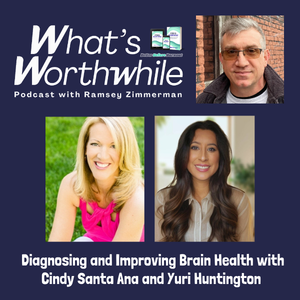
[00:01:58] Speaker A: Hey there, it's Ramsay here. That was Cindy Santa Ana and Yuri Huntington. Cindy is the integrative nutritionist for the Amen Clinics, a collection of 11 brain health clinics across the U.S.
she is also a nutritional therapy practitioner, author of the book Unprocessed Living and a culinary nutrition instructor.
Yuri is the faith ambassador for Amen University and is leading the outreach and connection to 77 faith communities which are piloting the new AMEN Whole 4 national program.
We had a wide ranging conversation about founder Dr. Daniel Amen's approach and decades of experience, how Amen's brain scan technology is uniquely effective and how Amen University educates the family members of patients so that they can better understand and participate in their loved ones healing journeys. If you are considering any of Amen's offerings or if you are intrigued about how to keep your brain and mind healthy as you age, this is a great episode for you. Let's dive in.
Hello Cindy and Yuri, how are you both doing today?
[00:03:07] Speaker B: Doing great, very well, thank you.
[00:03:10] Speaker A: Good, good.
Hey, thank you both so much for joining me today. I recently learned about Amen Clinics and Amen University and the pioneering work of Dr. Daniel Amen over the past few decades. So I'm thrilled to have you both here so that you can tell us more about that.
Cindy, let's start with you.
You are the integrative nutritionist for Amen clinics.
I understand that you provide nutrition coaching for patients across the network of 11amen clinics in the U.S. right?
[00:03:48] Speaker B: Yeah.
[00:03:50] Speaker A: What is the focus of Amen clinics and why is nutrition specifically emphasized for patients?
[00:03:59] Speaker B: The focus of the Amen clinics is to reframe or refocus. The way that we address mental health in the United States, the way it is currently being looked at is sort of antiquated. So our new way is by actually looking at the brain. Dr. Amen has put together this revolutionary scan called a brain SPECT scan. So it's S, P, E, C, T. It stands for single photon emission computed tomography.
Big word. Basically, it's a non invasive brain scan that is very calming and very relaxing. I've had one. So I've had, I've had a look inside of my brain and you just lay there while this machine goes around your head. It's not like MRI or CAT scans where you feel claustrophobic. It's very open.
It's a, it's a very non invasive experience. So we actually look at the brain.
We are able to now target treatment, the most effective tailored treatment to the individual. Rather than when you walk into your doctor's office or psychiatry or psychology, and using talk therapy or using medications, we are actually able to target our treatment to the individual.
And then you asked about the nutrition part. Why is that important?
It's because everything that we eat, everything that we take in becomes our hair, our skin, our nails, our blood helps with organ regeneration.
So food is strongly linked to brain health and our mental well being. Every, everything we take in. You know, food is either medicine or poison to us. And so of course that's, that's a huge part of our brain and mental health.
[00:05:51] Speaker A: And you know, in terms of brain health specifically, why and how is nutrition so important? Kind of in middle age as the brain. In order to keep the brain healthy as we get, you know, into later age.
[00:06:11] Speaker B: Yeah, prevention is key. Right. We really want to, I mean, obviously always from your, from childbirth to your teen years to young adulthood, we always want to be taking care of our brain. You know, as far as preventing accidents and falls and being exposed to toxins and alcohol, that's always important. But there was a recent study, they looked at 3,000 participants and they followed them for 38 years and they analyzed how glucose levels in your midlife so you're talking 35 to 50 years old.
Those that had a higher glucose level during that midlife range had a 14.5% higher risk of developing Alzheimer's later in life.
So it's really important for us, me middle aged folks to really care about our blood sugar. So I've made that my own practice specialty, what I deal with, with our clients at the clinic. I even wear a glucose monitor on my arm to help hone in my own blood sugar because this is really important to me personally because it, it runs in my family.
So caring for your blood sugar now is essential for how your body's going to handle foods later in life because, you know, because we develop insulin resistance and then you become pre diabetic and then type 2 diabetic. So blood sugar is really important now.
[00:07:44] Speaker A: Yeah.
And what kinds of, when people come to the Amen clinics, specifically, what kinds of things? What, what reasons, why are they coming? What, what is it that they're looking to solve specifically?
[00:08:05] Speaker B: Well, it could be anything from a traumatic brain injury that someone has had or maybe a child who's autistic.
It could be, you know, head trauma from a car accident, or it could be your 80 year old grandmother who has cognitive issues.
I've had clients as old as 99 and as young as, you know, four or five, six, eight, you know, young children who've been in accident or have head trauma or toxins, exposed to mold or Lyme, you know, so it runs the gamut of why they come to us. And unfortunately a lot of people do come to us sometimes as a last resort where they've spent thousands of dollars and gone to doctor after doctor after doctor and they can't seem to find an answer. And then when they finally come to us, we have such holistic care. We, you know, with the mind, the body, we sleep, movement, nutrition, psychiatry, toxins, hormones. Because we look at everything, we're able to find some things that maybe other doctors weren't able to find.
So it's really about that, that holistic care that we provide.
[00:09:23] Speaker A: Yeah, yeah, so that I understand. So I see. So there's a lot of really kind of acute issues that bring people to the clinics.
But, and I think it's wonderful that in addition to the really acute care, they have you doing supporting the foundations of health for overall health.
And these foundations of health are things that everyone really ought to be doing.
And so let's move over to Yuri. Thank you for your patience.
What is Amen University and how is it affiliated with the Clinics. And how does it bring, you know, good health practices to a much wider population, kind of beyond what the WHO the clinics serve?
[00:10:13] Speaker C: Yeah. So Amen University is a digital platform where anybody and clinicians or family member that want to know more about their brain health, they enroll into Amen University and do classes online.
So people, including myself, I started as a student, can log on, find out more about how we can help our own brain health.
And also the thing that got me to be a student is because I was so curious about how the brain looked like for someone who had ptsd. And I wanted to know how to, as my loved one had it, I wanted to know how to better help my loved one and know and understand how to be there for my loved one. So that's what Amen University is for. It's a platform online. Anyone in the world can go and apply and be part of the. Well, it's not so much an application process. So you go and you enroll and you get on a portal, you have these processes where you get to choose different courses. And the most recent one that just rolled out is our elite brain health coaching course. And that is unique in that this is the newest one. In 2024 it launched and people who sign up for these cohorts are signing up to be in a cohort of other clinicians or coaches. So there's two tracks.
So this is the clinics are eight months and the coaches is they're five months and it's a graduation and you have a mentor that walk alongside you through this particular cohort and then you graduate after the end of eight months or five months. And that's the uniqueness of this most recent course that Dr. Daniel Amen developed. And it is by far one of the best. I have taken several of his certificate courses and this is by far the most I've learned about Amen University or the brain health. So Amen University is an online platform and it was founded, or it was, yeah, obviously it was founded by Dr. Amen and it started in 2011.
So that's many thousands of students have gone through courses and the purpose is, like I said earlier, just like when we want to know more about our loved ones needs and how to help them, it's more than just a symptom.
So the course helps us, as just regular people, learn more about how to show up for our loved ones. And the entire Amen Clinics model is working in four circles. And, and these four healing domains are what we're taught. And as students we're taught that It's a biopsychosocial spiritual model. So there's the biology of it. So our brain, it's affected.
So how do we help heal it? The psychological part is our mind, how we think, and the social part is our relationships and the people we're around.
And then lastly our spiritual what's our purpose, our connection to God, and we heal in those four elements. So that's what the courses teach us. And they show that we don't focus on what the symptoms are, but we look at the actual organ that needs to be treated. We're not medical professionals. We're learning from Dr. Daniel Amen, a double board certified psychiatrist. We're learning from his experience and over 40 years of knowledge and, and we are taking that in and better helping ourselves so that we can help our family.
[00:14:15] Speaker A: Here on what's worthwhile. We've spoken a lot about burnout and why it's important to avoid it. So now let's talk about burnout resilience. Burnout resilience is your capacity to handle stress without losing your clarity, your energy or your sense of purpose. It is the ability to recover well, stay steady under pressure and keep moving forward when life gets demanding. And the good news is it can be built by strengthening the foundations of holistic health. I created the burnout Resilience Zone assessment to help you see where you stand and which foundations may need attention. It takes just a few minutes and gives you a personalized breakdown with clear recommendations. Go to burnout.whatsworthwhile.net and learn which zone your burnout resilience is in.
When I, when I sort of typically think about, you know, mental emotional challenges and sort of how to deal with those, I feel like it's things either are channeled into psychology or into psychiatry.
And I think of psychology as, you know, like the talking cure and working with a therapist. And then I think of psychiatry as going more of a medication and pharmaceutical route.
Does the aim and approach, you know, fall into one of those buckets or is it complementary?
I guess this is a question for either one of you that would, would kind of like to take it.
[00:15:50] Speaker B: Yeah, I think it's both. It's, it's, it's.
Yes, we have psychiatrists that you can talk through your issues, the trauma, ptsd, as Yuri mentioned, but also there might be a need for medication or is the patient on the wrong type of medication for their brain. And that's one thing that I really love about what the clinic does is our functional med docs and our psychiatrist usually not with everybody. But most people who are on medications, who need them for specific issues, whether it's bipolar or schizophrenia or severe anxiety, depression, etc.
There's a blood test that you can get to look at your DNA and how it reacts to certain medications. I think it's called the genome mind. It is amazing because so many patients will come to us and we'll do this test and we'll see that XYZ medicine completely interferes with their. Their framework, their body, their DNA. And so we switch them to a different medication, and all of a sudden the heaviness is lifted, they start to feel better, maybe they have fewer side effects.
So that's something that every practitioner should be. Should be doing with their patients, not just rolling out blanket prescriptions, because it could be the wrong one. So the clinic looks at the brain, then we're able to run the labs, do the work, and not take place of psychiatry. But yes, it's complementary, but we do offer everything from psychiatry to psychological session to functional medicine. There's many patients that come to us with cognitive issues, thinking, and I'm talking about people in their 50s and 60s thinking that this is it, they have Alzheimer's, when really they just have Lyme disease.
So, you know, we're looking, we're looking everywhere. We're on where the rug is ripped up and we're digging under and we're trying to find the root cause of why somebody's having these symptoms. And that's what I love about the clinic is this. This whole approach, this whole body approach. Not just, well, let's just slap some medication on you and send you out the door and help you do better, which most. Most people don't.
[00:18:22] Speaker C: Yeah. And I want to add to that. Yes, Cindy, because that's so right. And you brought up something that made me remember my experience because I'm also a patient. My husband and I went to go get a scan as well over here in Irving and. And Texas.
So in my experience as a patient at Amen Clinics, I went.
I went because I was a brain health coach, and I wanted to make sure that I was coaching well, you know, and when I refer my clients, I wanted to just also know the experience. So in my mind, I'm going because I just want to know the experience. Well, I show up, I get a brain scan, and I come with my husband, so he gets a brain scan as well. And at the end of that whole thing there, because it's three days, I did the resting scan and the active scan because it shows different activity when we're thinking, concentrating or when we're resting.
But before we do the scan, they take us in a room and they do our history. Just like Cindy said, it's this holistic view. It's not just the scan by itself, but it's our history, our experiences. Have we had, had trauma, you know, those kind of questions that they're going, they're digging in deep, they're doing a holistic view of all of our biopsychosocial, spiritual. So after our scan, I'm sitting with the psychiatrist and my husband and I are, we're looking at my scan and it turns out I have ptsd.
And I was going to school, Amen University to learn how to care for my husband who was diagnosed with ptsd. So when we're looking at both of my husband's scans and mine, we both have ptsd, but it's showing up different in our scans. So therefore our treatment is aligned differently because of what the brain shows.
Another very unique factor that Dr. Amen provides, the care that he has at Amen Clinics, is that in my husband's case, he's 42.
And well, he was 42 when we went and he got his. So we did this assessment to find out if we had, you know, ADD and all these things. Right. So in the assessment test, in the written test, it did not show up that my husband had add, but when they got the results of his brain scan, oh, he definitely has ADD. And it was obvious and that as a 42 year old man living this life, not ever knowing he had add, so many answers were given and he felt so validated because of his experiences and how he didn't really fit in, in the way of learning and processing with the rest of them.
And at 42, he had the ultimate answer he needed about his brain because then he recognized it wasn't his fault, it wasn't him not trying enough or wasn't good enough to learn or learn like the rest of them. He knew he was different. But had he just gone the traditional route and did the assessment test and then the doctors would have told them he doesn't have add, he would still be stuck. But because of a SPECT scan and because we went to Amen clinics, his life was shifted for the better. And that is our story and part, part of why I'm so in love with how Amen Clinics does their things.
[00:21:57] Speaker B: That's really powerful. Great.
[00:21:59] Speaker A: That's wonderful.
You know, we're all unique. We all have our own sort of makeup, how we're built how God created us and, and also based on all of the experiences that we've been having, how we live our lifestyle, the behaviors that we have and the environment influences, even influences our genetics in terms of how our genetics express themselves. And it sounds like a really terrific diagnostic tool.
[00:22:38] Speaker B: It is.
[00:22:39] Speaker A: And at the same time, I don't know if everybody's going to run out and get their brain scanned. So it seems like there's probably opportunities to reach people in other ways and through other means.
Yuri, I understand that Amen University now is piloting an approach to reach and, you know, facilitate groups of people through faith communities.
And it's called Amen Whole Four. It's in a, it's in the pilot phase. I was excited to learn about that and I would love to hear more. Can you tell us about that?
[00:23:19] Speaker C: Oh yes, it's my favorite topic.
Yes, we are, we have just launched the pilot phase of Amen Whole Four.
So if people in your audience have heard of the Daniel Plan, we like to say it's The Daniel Plan 2.0.
We are, you know, Dr. Daniel Amen created a co created the Daniel Plan. So a lot of the material or understanding of that comes with Amen Whole Four.
So Amen Whole Four is based on the information or the things that our body needs when it comes to again those four circles.
And the pilot program that we're launching right now is about there's 77 faith communities throughout the nation and they were chosen to pilot Amen Whole Four in their faith communities.
And what this program is, is it's two separate programs called the Foundational and the Mastery. The foundational is six sessions and then the mastery is 12 sessions. So essentially the pilot program is doing this 18 session long program with their faith communities.
And what we're doing, the purpose of the pilot phase is that we want to get data. We want to know as the participants are going through Amen Whole Four, what are they experiencing and how are they feeling?
What are the learns, the wins and the learns that they're experiencing through this process?
Because what's happening here in the pilot phase is Dr. Amen is receiving the data from these participants in the pilot program and he's collecting the data and he's going to the White House and he is showing them. This is the participant that started week one one and then ended week 18. And look at the difference. And that is what we are doing currently with the pilot program is receiving data on as when Participants start with Amenhole 4 from Session 1, all the way to the end of the mastery session. What are the differences in their body in all those four circles? And we assess it by first doing that assessment. It's an assessment that all the participants will take from first. Then they go through the foundational sessions and then they do the post assessment. And so we have data there and then the same thing before and after the mastery. And those are, that's the data that we're collecting on top of the weekly check ins that the participant will be doing. And all of this is done currently. Right now the pilot program ambassadors are launching it. Currently the first one launches February 1st and we have a window from launching February 1st to March 15th. And in between those months, that's when these pilots are starting to roll out this fate their, their sessions. And I'm already hearing so much excite exciting feedback that I mean this is something so unique and different that Amen Whole Four, like it's Amen Whole Four is different separate from what's going on in Amen University right now. And so with Amen Whole Four, it's specifically for faith communities and it's intertwining biblical passages and our faith with this. And so it's just such an experience already. And we're not even launched to the participants yet. We've just introduced it to the pilots and we're already seeing great testimonies about the ambassadors feeling first inadequate because it's a big deal like how can they be an ambassador for something that they fully don't feel equipped for but once they receive the training and they're like I can do this. And I mean the Lord is already working in their heart and mind to feel equipped. So already testimonies like that are happening just by this pilot rollout. And yeah, we endeavor to go global, but right now we're doing nation.
[00:27:34] Speaker A: Has anything, I mean is this, is there anything else that is currently in existence, you know, through faith communities that is like this or is this kind of the first of its kind, do you think?
[00:27:49] Speaker C: Yeah, I think Daniel, the Daniel plan was part of the vision that Dr. Amen had and has for Amen whole four. So there has been something like it that was, that had started this. Amen Whole4 is unique in that it's a program that's coming from Amen University and within Amen University there is a Soul Faith national faith ambassador, which is, which is me. I'm the faith ambassador for this particular project.
And so essentially I'm the one that's helping to nurture the local ambassadors. So it's different in that there is a live person walking alongside the ambassadors who are in their local faith communities and they're connected to the national faith ambassador. So it's just this another type of like a cohort, a community.
And along the process the, the, the ambassadors will continue to get the one on one coaching with me as their national faith ambassador. So there's, there's always going to be that person that they're connecting to as they're walking through this local ambassador pilot program.
[00:29:12] Speaker A: Look, we all deal with stress. Stress is not the problem.
The problem is that our body's innate stress response is built for physical challenges instead of the mostly mental, emotional and virtual stresses that we face today. In my book, Stress Response, you'll learn to manage your response to stress in order to reduce anxiety, avoid burnout, and find calm and steady focus. The ebook is available on Amazon and only 99 cents for a limited time. After you download, please don't forget to leave an honest review and rating so that others will find it too.
And you, you sort of just threw out there, he's going to be bringing it to the White House. Did you mean that literally? Like how, how are you connected to the White House?
[00:29:58] Speaker C: Yes. So currently he, Dr. Amen has been in the White House in the faith, or what do they call the Faith Cabinet?
So I think that's what it's called. But he's been there in the faith community, talking to the White House, partnering with Paula White. She's the head of the faith office there at the White House. And he's been in communication with her and he has shared, Dr. Amen has shared this program with different, with other people within the White House. And I'm not saying everything in detail because I don't remember off the top of my head, but Dr. Amen has visited the White House. He has presented there at the White House, this particular program. And we're getting really good feedback.
[00:30:49] Speaker A: Well, that's, yeah, that's really, that's really exciting.
I wonder what kinds of things, I'd love to hear a little bit more detail about the, the kinds of things that people would be working on during the whole four. And you know, you know, Cindy, I wonder too how much of that is, you know, either very similar or directly connected to the types of things that you advise your patients on a regular basis. Like, can we get into just a few more of the details of like, you know, what the potential impacts are going to be on those who participate.
[00:31:28] Speaker C: Absolutely, Absolutely. So like the first foundational program, there are six Sessions. The first session is understanding that getting healthy is worship. So it's this mind shift of we're living sacrifices. This is the body of it's the temple of the Lord. So it's shifting the mind in giving new language if they haven't had it already.
New language about our own body, our body, the way we feed it, the way that we allow it to think those types of things. We're now offering an educational way of understanding what our bodies are getting healthy is worship. And that's the entire first session. And that's what the participants are going to be learning. The first session.
It's a type of plug and play. So the ambassadors have this kit of Amen, whole four they're pressing play on this video that Dr. Amen is delivering the message and the participants are receiving it. They have their participant guide and there's a facilitator that's facilitating it and they have their own guide and they're all learning together.
And session two is the topic of it says here, get your brain and food right and your mind, relationship and spirit will follow. So this session is on renewing the mind and we're incorporating the four circles. Every session. The participants are listening in for an hour. Dr. Daniel Amen is teaching this and they're listening in and they're learning how to renew the mind based on biology, based on psychology and relationship and our spirit.
So it every session breaks it down in those four circles and the participants are receiving that. It's so unique, so unique because Dr. Daniel Amen is based a lot of his teachings, especially throughout all the courses at Amen University, unique in that Dr. Amen is the only one in the world with over 300,000 SPECT scans to pull his data from. No one else has that. He's the only one.
And so that all that information, all that experience with that SPECT imaging is where the foundation of Amenhole 4 is. Because of the experience and history of all of the data with spec script scans. And the participants are going to leave these classes with learning more about who they are in these four domains that if their brain is healthy then their mind will follow.
And they're the, their relationships are going to deepen in a beautiful way and their spirit is going to be revived. It's going to feel a lot more refreshed because their purpose is going to be renewed. And it's all through community coming together, learning with a community of others and hearing one thing like the one mind, one accord kind of experience.
And everybody in there is Learning the same thing together. And so there are accountability partners. They're keeping each other accountable. And every week they're meeting back up and.
Yeah, I'm going to pause there. I kept talking. I don't know if I answered your question.
[00:35:06] Speaker A: No, it was wonderful. I think we were all just enjoying the vision of how that's going to work, how that's going to work together.
[00:35:14] Speaker B: How many people you're going to reach too. I mean, this is going to just, you know, 77 faith based communities and thousands and thousands of people are going to benefit through this. So that's, that's an amazing data set that we're going to have very soon and I know we'll have amazing results.
So I'm excited to hear what happens in May.
[00:35:38] Speaker C: Yay. Yes.
[00:35:41] Speaker A: And just I wanted to, you know, for those who are listening who don't quite have that opportunity yet, it's still, it's like, okay, I wonder, Cindy, if you can give some, some good sort of general advice on, you know, when you start working with a client, when you start helping them to really think about where they're at with their nutrition. What kinds of, you know, first advice do you give them in terms of things that they ought to look at in, in their life and, and maybe some ways that they can start to make some improvements.
[00:36:17] Speaker B: Yeah. So the first thing I do when I meet with a client or a patient at the clinic is to take, obviously we have their full history, we have lab work, but I also take like a questionnaire, full account of their daily life. What time do you wake up? What do you, do you drink coffee in the morning? What do you put in it? How many cups of coffee?
What are you eating for breakfast, lunch, dinner, snacks?
Do you, you know, snacking on candy, mints, gum, what's your beverages, treats, alcohol intake, your exercise, how much movement, how's your sleep? Are you pooping every day?
You know, are you belching, bloating, tooting, you know, gassy, diarrhea we have because, you know, digestion is really important. So I ask all these questions and then I put forth a plan. It's like, okay, here's what's going on, here's what you're eating.
So if somebody's having two or three cups of coffee in the morning, okay, we gotta, we gotta dial that back because caffeine is a vasoconstrictor, you know, which means it constricts those arteries. The blood flow doesn't get to the brain. So I'm okay. If you want to Have a cup of coffee every day. But let's make it really good, high quality, high polyphenol, low acid mold free coffee that doesn't have coffee mate in it, that has maybe, you know, real cream or half and half and no sugar.
A really good protein, fiber, fat breakfast to start the day. I tell all my clients, if you can look at your plate and change the composition of it to include lean proteins, fiber rich vegetables, a small amount of healthy fats so you have protein, fiber and fat. Pff. Not your bff.
Make your meals, pff.
Then we will not have the epidemic of diabesity as Dr. Amy calls it, because you're not eating bread, cereal, pasta, cookies, crackers, bagels, muffin, salt, donuts, rice and pizza all the time, which is what the old food pyramid was. At the base was 6 to 11 servings of bread, cereal and pasta every day. And I was one of those that was eating that. And yeah, by the time I was 40, I was 50 pounds overweight and on four medications suffering with a lot of health issues.
So I got rid of all of that and started eating those protein, fiber, fat meals, moving my body every day, got rid of processed foods, got rid of foods that have high fructose corn syrup. Then my triglycerides went down. So now my lipids normalize.
I started eating nutrient dense farm fresh foods. So I started sourcing all of my meat and eggs from a local farmer so everything was grass fed.
I've moved recently and I've noticed that that is a challenge for certain areas in the United States that not all of us have the ability to live near these amazing farms.
So it is a challenge to eat healthy in the U.S. when you're in, not in areas where you're surrounded by all these great farms. So you know, so I've made it my goal to search out farmers markets, local farms that are doing it right. Maybe I need to order some things online just to kind of, you know, fill in the gaps because I want the omega 3 wild caught salmon or halibut, things like that.
So I go through everyone's diet, make the swaps, you know, what are you eating for lunch? Are you having salads or are you eating sandwiches or are you skipping meals and not getting enough protein or not enough calories, making sure that they're eating antioxidants to quantify quell the inflammation in the body, getting rid of the sugar and the processed foods, alcohol, which is a neurotoxin, and then adding in those good Omega 3s, the fiber rich foods which build gut health. Fiber from vegetables is what feeds our gut flora. Our gut flora is what makes our serotonin, our dopamine, our gaba. All those neurotransmitters made in the brain is they're made in the gut. 80% of them are made in our, in our gut.
Those little buggers will eat anything. Those little bacteria will eat Ding dongs and Tostitos, but then you get crappy neurotransmitters. So if you can eat fiber rich vegetables, you're going to build a better, better gut biome and better, you're going to make better neurotransmitters. So fiber rich vegetables is very important and healthy fats. For a long, long time we were told that fats are bad and don't eat fats. It was so ingrained in my brain as a young adult that I was afraid to eat an avocado or nuts or seeds because they had too much fat. And I was afraid of a natural whole food that I was missing out on potassium and avocado and great fiber and vitamin K and magnesium.
So healthy fats, nuts, seeds, olives, fatty fish, nut butters, olive oil. If we can start to get those good, healthy fats in our diet and get rid of the soybean oil and the vegetable oil and the canola oil and cottonseed oil, you're going to have much better lipid panel, you're going to have less inflammation in the body. Your, your whole body is going to be much healthier.
And the other thing that we all like to do at the clinic all of our doctors hone on is something called neuroplasticity, which is the brain learning how to be flexible and adaptable. That neuroplasticity helps the synapsis fire. And how do you do that is by learning something new, Either a new language or an instrument or a new sport. Dr. Amen loves ping pong.
I'm trying to learn a new language right now for a trip I'm taking later this year to a foreign country.
So always trying to learn a new skill. Skill is really important.
So that keeps that brain flexible and adaptable.
[00:42:24] Speaker A: That was a wonderful list.
Yeah. You know what I love about this whole approach is that it's really just getting back to the foundations and the basics of just good health, eating real food, you know, having sort of productive practices in your life.
And it's so simple and so difficult, right?
[00:42:57] Speaker B: It is. Because modern life is busy and hectic and chaotic and stressful. And how do you have time to shop for and prep and cook nutrient dense meals is very hard for the modern family who have kids who are going to sports three or four or five nights a week or every day of the week.
So yeah, I really think that sometimes we just need to step back.
I've had parents before tell me that seven nights a week they're traveling and taking their kids here and there and there seven nights a week. So it's through the drive through every night, or they're packing sandwiches or they're getting pizzas at 9 o' clock at night, like so this is not good for everyone's health in the entire family, much less a child athlete who is playing sports.
So sometimes it just takes a step back and say, is this really beneficial for my health? Is this going to sustain me in the long run? And the answer is no, it's not. One day it's all going to give out, somebody's going to be sick, going to end up with nutritional deficiencies and stress and cortisol way high and blood sugar out of control.
So yeah, it takes a lifestyle change for sure.
[00:44:14] Speaker A: And there's also, there's all of the pressures that you were just describing in order to do all of those things. There's also peer pressure and there's pressure between and among individuals. Which is also why I really love the approach of, of reaching through faith communities in order to get people together to focus on and support each other as they learn about and begin to sort of make health changes and health improvements within their lives.
[00:44:48] Speaker B: Yeah, I love that. I love that. And even if it's not something that's in your community, maybe it's something you start or you bring somebody in like, like me locally to come and speak to your, to your community on, on things that they can do that can, they can change their habits. And one thing I want to point out that is, that's interesting and challenging with today's nutrition is the conflicting advice.
And you read something online and then you look at a book and then you hear this expert say this and you get 20, 20 nutritionists in a room and they're all saying something different.
Sometimes we just have to get back to what you feel is good for your body.
And if you're not healthy, if you're not thriving with the way that your current life or lifestyle is going, then obviously something has to change.
But it's, it's, it's just an education process.
Right. But we also have to realize that not everybody knows what's best and not one diet is going to work for everybody. That's why my approach is very bio individualized. That's why I'm looking at one individual's labs. I'm looking at what works for their lifestyle. I'm not going to recommend somebody who's working 10, 12 hours a day to go shop and prepare fresh meals for their family every night.
It's not sustainable. They're not going to be able to do it. So sometimes we have to kind of act that and say, okay, what about this healthy meal delivery service? Or what about, you know, these taking these healthy snacks, you know, taking some grass fed beef sticks and some sugar snap peas or some nuts and seeds and throwing them in your bag so that when you're running around with your hair on fire and you have a snack, a healthier snack versus a vending machine treater or sugary coffee or something like that.
[00:46:43] Speaker A: Yes.
There's so many things that we can and could do and I think we should begin to wrap up here. Thank you both so much.
Cindy, how can people find you online and find more information from you and from Amen clinics?
[00:47:05] Speaker B: Well, so obviously I'm the integrative nutritionist for the Amen Clinic. So if somebody wants to reach out and book an appointment with me, they actually don't have to be a patient at the clinic. But if they are, it's either an add on service or sometimes they're included with programs like the memory program. They actually get two meetings with me if somebody's in the memory program.
And then I also have my own practice@ UnlockBetterHealth.com where I deal mostly with women over 50 with blood sugar issues and hormone imbalance.
[00:47:35] Speaker A: Great, great. And Yuri, how about you? How do they find you? How do they learn more about the Amen Whole Four and follow the progress as your pilot proceeds?
[00:47:48] Speaker C: They can go to amenhole4.com they can also go to amen university.com and either of those will give them where get them where they can do a one on one call with me if they want more information about doing a Amen Whole4 program in their local community when we begin to launch it for the public, which is going to be mid fall, earlier mid fall this year. So anybody who wants to be an Ambassador of Amen Whole4 in their local community can go to amenuniversity.com and find out more about that or book a call with me and it's on the website and my schedule is there. They just click the little button and they can do a zoom call with me.
They can also reach me at my email if they wanted to. Why? Huntingtonman University.com Fantastic.
[00:48:47] Speaker A: Well, hey, thank you so much both of you. It was great having you here and getting some time to spend with you today.
[00:48:53] Speaker B: Thank you.
[00:48:54] Speaker C: Thanks Ramsay thank you guys.
[00:48:58] Speaker A: Ready for more? Visit whatsworthwhile.net to listen to podcast episodes. Master your response to stress by reading my book Stress Response, available through Amazon, or to get better before burnout sets in by requesting the free guide. Regardless of where you are in your journey, I'd love to hear from you and talk about how we might move forward to together. Please contact me, Ramsey Zimmerman through the website or on social media like Instagram, Facebook, LinkedIn, or X. Thanks.