Episode Transcript
[00:00:11] Speaker A: What's worthwhile to consume, consider, believe, say.
[00:00:16] Speaker B: And do towards peace of mind, vitality.
[00:00:19] Speaker A: Of body, and joy of spirit.
[00:00:22] Speaker B: I'm Ramsey Zimmerman. Here's some more healthy living motivation and discussion.
[00:00:31] Speaker C: The focus is on today.
What are you gonna do today to be better than yesterday? And then tomorrow, what can I do to be better than today and just continue to work on. On that. Want to start exercising? Maybe they. They did in the past, maybe they never have. And they want to get better but then become overwhelmed. They look at, well, how am I going to be Jack Lane? You don't have to be Jack Lane. You can be better. You can be yourself. And what can you do today to be better than you were yesterday?
[00:01:00] Speaker A: Hey there.
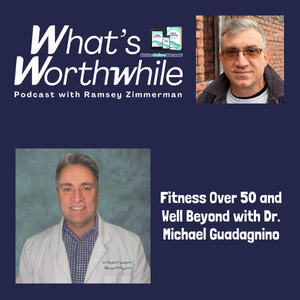
[00:01:01] Speaker B: It's Ramsay here. That was Dr. Michael Guadagnino. Dr. Michael is the author of Fitness Over 50, 60, 70 and beyond and a chiropractor based in New Jersey. We had a really fun conversation not only about health and fitness for us Gen Xers and beyond, but also about the good old days of drinking water out of the garden hose and running around outside till it was time to come home for dinner. Dr. Michael promotes common sense, incremental approaches for those of us of a certain age to stay in shape or get back in shape. This is a great episode to get some pointers and have a few laughs. I hope you enjoyed listening as much as I enjoyed chatting. Let's jump in.
[00:01:42] Speaker A: Hey, Dr. Michael, how are you doing today?
[00:01:45] Speaker C: Hey, how are you? Ramsey? Thanks for having me on.
[00:01:47] Speaker A: Yeah, absolutely. No, I'm doing great. Thanks for speaking with me today.
So you are a chiropractor and author and a holistic health advocate, and you are based in Ramsey, New Jersey, which is fun for me because I didn't even know that there was a town in New Jersey that was named after me. So that's pretty cool.
[00:02:07] Speaker C: It's quite a coincidence. I guess I was destined to be on your show.
[00:02:10] Speaker A: Yes, I think that was it. I think that was it.
So the, the title of your book is fitness over 50, 60, 70 and beyond. So that's what I really want to talk to you about today.
But let's talk about you for a little while first.
So how long have you been a chiropractor and how have you seen people's condition and physical fitness and things like that kind of change over the years?
[00:02:43] Speaker C: Yeah, great questions.
I first, I've been a chiropractor since 1991. I graduated in April 1991. So it's 34 coming on 35 years.
I did Receive my bachelor's degree in biology prior to my pre med, the chiropractic school. I worked one year after I graduated. It was an internship and then I opened my practice after that. So I've been in practice like 33 years or so.
How I've seen things change.
I was probably on the technology.
Some of the stuff I do my office now I use cold lasers, I use some decompression. A really great machine, DRX9000 for patients with slipped disc, herniated discs.
These things didn't exist when I first began practicing. So what I've seen is a lot of the conditions are pretty much the same. People still herniate, their, their low backs, their, their discs, they still get sciatica. But the treatment for it has been completely changed a lot over this time. And seeing the technology and development, I'm sure it's going to continue to go in that direction. As a funny. Well, it wasn't so funny what happened. But one of my computers on my machines went down a couple weeks ago and instead of panicking, we got a new computer. But we upgraded everything. So everything continues to do even within the structure of the, the system, it continues, the technology continues to get better.
So that's what, that's the big difference that I've seen over the years.
[00:04:15] Speaker A: Yeah, yeah. Technology is great when it works, right?
Exactly.
[00:04:19] Speaker C: It doesn't work, you running around.
[00:04:22] Speaker A: Yeah, but then it's good because then you got to just go old school and go back to kind of the ways that you were doing things, you know, all along. So it's good to have that, that depth of experience, be able to sort of get back to that as you need.
[00:04:37] Speaker C: Oh, for sure. I mean we went back to 1990s style of taking care of them, which does work. It's very effective and I have a lot of experience doing it. Yeah. So it's, that's, that's how we have to handle things.
[00:04:49] Speaker A: So I don't want to make any assumptions, but if you've been, you know, practicing since the 90s, then you probably fit into that age group of 50, 60, 70 and beyond.
[00:05:01] Speaker C: You are right.
Well, yeah, a lot of the book was written towards what I know best. I know best being over 50. So yes, I fall right into that bracket.
[00:05:12] Speaker A: Well, they say that we should write about what we know.
I'm in that age bracket too. I'm early 50s. But do you have a lot of patience in that age bracket in your practice? And what are the big issues that they us we see during that age bracket.
[00:05:34] Speaker C: I do see a lot of patients in that age bracket. I see patients from wide variety, but I do see a lot in that age bracket. And the big thing I see is mobility. People begin to lose mobility as they get older. And as you begin to lose mobility, your lungs don't expand because your back is not flexing, not moving the way it should. You're starting to see.
Which can lead to issues with other issues, other physical issues.
People's hips begin to hurt, their shoulders begin to hurt, and a lot of it becomes from a lack of mobility. And what I try to talk about in my book is how to bring that mobility back, how to maintain that mobility in your early 50s. Someone might be picking the book up in their 70s or 80s when they've lost some of this mobility. So there's different types of exercises, different types of things people can do depending on your age. I mean, realistically, 80 is different from 50, but if you don't take care of yourself at 50, you don't do things to help yourself at 50, you can age quite pretty quickly. So there's a whole array of what I try to talk about in there, but the main thing is how to age gracefully, how to age slowly, and how to continue to maintain that mobility and that in your health.
[00:06:48] Speaker A: Yeah, age gracefully, age slowly, maintain mobility.
You know, I like to joke with my kids that I'm not getting old. I'm just. I'm in my prime. I'm just perpetually in my prime, and I would like to keep it that way. How.
What kinds of things can people be doing, you know, kind of at our age, to.
To do exactly that. Like, to maintain what they have and to even get back some of what maybe they have been losing.
[00:07:27] Speaker C: Well, you are in your prime because when you're younger, you don't have the experience and the knowledge.
[00:07:32] Speaker A: Right.
[00:07:33] Speaker C: Our age. Experience and knowledge. But keep going.
[00:07:36] Speaker A: Keep telling me how I'm in my prime. I like this going. It's good.
[00:07:40] Speaker C: Yeah. I'm appreciating you had me on the show. So.
[00:07:45] Speaker A: All of us know that's really true.
[00:07:46] Speaker C: Yeah, it is. Because you do learn it with experience. You do. You think about the things. The way you see the world now is different from the way you saw the world at 20. And I'm sure you can see the world differently. We all are at 80 than we did at 20 or in the 50s, so. Yes. So that makes a difference.
I went off on a tangent. What was the original question?
[00:08:06] Speaker A: No, I think mindset is really critical and really important. Because, you know, if we sort of get into this mind space of, oh, you know, things were so much better then, and I can't do those things anymore, then that just bogs us down. Whereas if we're thinking, like, okay, I'm in my prime, like, I'm as good now as I'm gonna get, and actually, that's not true. I'm gonna get better because I decided that I'm gonna get better.
So it's like, the question is, in a practical sense, what are some of those things that we can be sort of focused on to continue to stay as good as we are and to sort of reclaim maybe some of the stuff that we've lost the focus on today?
[00:08:51] Speaker C: What are you going to do today to be better than yesterday or put yourself in a trajectory in the direction to be better than you were yesterday, and then tomorrow, what can I do to be better than today and. And just continue to work on that?
It could be a slow process.
People become overwhelmed.
They want to start exercising. Maybe they did in the past, maybe they never have, and they want to get better, but they become overwhelmed. They look at, well, how am I going to be? Jacqueline, you don't have to be Jack Lane.
You can be better. You can be yourself, and what can you do today to be better than you were yesterday? And that's all. Just take that one step at a time. And as time goes on, as you get past the three weeks, four weeks, a month, six months, you start to see, yes, I am better now than I was six months ago. And that's all that. That's all it is. Just small steps. Don't become overwhelmed by this big picture, because we are bombarded by a lot of information constantly.
A lot of, you know, commercials on tv, a lot. A lot of stuff online, and everything seems to be great. But my life, you know, that's how people kind of. Kind of look at it. And it's not true.
Just what do you want to do? What do you want to do today to be better than yesterday?
[00:10:07] Speaker A: So with mobility, what can we do to maintain our mobility or get it back? I mean, are we talking about, like, stretches? Are we talking about exercises? What are we talking about?
[00:10:20] Speaker C: All of that. I mean, in my book, I discuss all from yoga to stretching to weights, everything. And what fits in with. In your lifestyle? What fits in. In your abilities? I mean, somebody in their 80s is not going to get underneath the bench and start throwing up at heavy weights. But there are things they. They have chair yoga, they have other types of things. That you can work with just to keep that, that mobility.
When you're younger, even if someone's younger, say they haven't, and then they're stiff, they're, they're sore, they're out of shape. You know, a lot of times I tell people, just start walking, just start walking, get outside, breathe some fresh air, even just go to your driveway and come back, you know, in a week, maybe you can go down the street a little bit and come back and that's, you're better there and just slowly just use that mobility again. Stretching. Yeah, stretching is good just to do. Stretching is good before you walk to help prevent injury, but it's also good to help the mobility. Whether it be just some simple exercises to stretch your neck, get your shoulders, your hips moving, your ankles, it all, it all makes a difference, all helps make a difference to help prevent arthritis, to help with your blood flow. And that whole aspect of making myself better, make myself more healthy.
[00:11:38] Speaker B: Hey guys, do you ever feel like you're gonna lose it? Are you doing your best, showing up at work and at home for your family, but struggling, tired all the time, snapping at people, hangry, restless and not sure what's going on? Well, let me tell you, you need to get better before burnout. I'll send you a free PDF guide and tell you about the 12 week better before burnout journey that we can take together. Visit whatsworthwhile.net to learn more.
[00:12:05] Speaker A: What do you say to somebody who is maybe, oh, how do I want to put it? Who is maybe discouraged or feeling like they have already gotten, you know, down a path where their prescriptions have prescriptions and you know, it's hard to really do stuff like how do you help people kind of come back back from that?
[00:12:40] Speaker C: Yeah, that's, and that is a real issue. I tell people, get yourself a notebook.
Write down your goals, write down the things that, that are, that are bothering you, upsetting you, that you think you can't do, and then go back to those goals and incorporate them.
You know, say I, I, I, I can't walk much. I, I, I have tons of prescriptions and you know, the goal might be I want to get off all these prescriptions. I'm not at all telling people what not. You got to talk to your prescribing doctor what to do, what not to do with that. I'm not giving that information, that advice, but what I'm saying is that create this, write your goals down and then reverse engineer them. You know, I want to lose 40 pounds is a great Goal. So work backwards. Well, how are you going to do that? And take up the steps back and back and back until the very bottom steps. And when you do get discouraged, just go back to that book, Go back and see what is you, you can do to get yourself better, get yourself healthy, get yourself to reach your goals.
And that actually could be for anything in life, not just your health. It could be in business, whatever you said, write your goals and reverse engineer them and then start in the bottom and just slowly work your way up and then adapt as you go along. I mean, you might be able to skip one or two steps because it's so easy, or you might get stuck in a step and you might have to kind of adapt to that. But just work your way through your goals, reverse engineer them and try to stay positive. We all, you know, life is not what we see in social media.
There are things that get in our way, there are things that frustrate us, things that just makes. Makes life a challenge. And by writing things down, right, writing your thoughts down, and you can just get lost in them again. Go back and see.
You could write down too. I journal, I keep a notebook. And things that when you're feeling positive, you're writing things down. And when you start to get down, go back and look at again and get yourself back in that mindset. You know, it's, you know, it's, you know, I use the, the example that we're always swimming upstream like a salmon. Yeah. Sam is always fun. Nothing's easy, you know, but that's, that's, I'm just saying just, just start basic of a notebook, pen and write everything down and then start to assemble from there.
Yeah.
[00:14:57] Speaker A: You know, you make a great point because social media, I don't know, social media is so many different things. Right. But one of the things in social media, in one aspect, it's like people, certain people, they only post about sort of the best days, right. Because you want to put on a happy face.
But then you get this sort of skewed perspective of the world that everything's great.
But then of course, you also have people on social media who are, you know, screaming about calamities and catastrophes. And so I guess you get the opposite too, that everything's horrible.
[00:15:40] Speaker C: Right.
[00:15:40] Speaker A: And then you also get all kinds of promotional materials from all kinds of people that would like you to do all the things that they want to do.
So social media is, I guess, is just this mixed blessing of.
Yes, it's great. It's communication. We're talking to each other. We're hearing about our families and sharing, but at the same time, we're getting these interesting, weird, skewed perspectives on life.
And, you know, if we're talking about people that are in their 50s, 60s, and 70s, we did not grow up with any of that. You know, that doesn't really come second nature to us. You know, in some ways, it's a poor substitute for actually having real people around and, you know, real interactions with real people. I mean, I discussed.
[00:16:30] Speaker C: I discussed that in my book. Yeah, I discussed my book.
[00:16:33] Speaker A: Yeah.
[00:16:34] Speaker C: Connections are really important. You have to talk to other people.
[00:16:39] Speaker A: Yeah.
[00:16:40] Speaker C: It's this. This cyber world is not real.
You and I, when we were kids, we probably went out, we were told to come home when the lights went. When the lights came on, the street lights came on. So it's.
It's a completely different world.
Yeah, exactly. And get out of the house.
Stay in the house.
[00:16:56] Speaker A: Yeah. Go play outside.
Basically. That was.
[00:17:00] Speaker C: That was the Gen X world. Yeah.
[00:17:02] Speaker A: Yep. I saw a. I saw a T shirt online the other day that said Gen X powered by neglect and hose water.
[00:17:13] Speaker C: Yes.
I can remember drinking out of hose.
[00:17:17] Speaker A: And I just being like a Marvel X Men nerd from way back and drinking more water out of the hose clothes. I was just like, yes, I can totally relate to that.
[00:17:28] Speaker C: That's our superpower. Yeah. Yep.
[00:17:31] Speaker A: That's right. And it's just eating dirt, you know, But I mean, hey, it was clean, all natural, organic dirt.
[00:17:38] Speaker C: That's true. But we come home bloody and we didn't run home. We came home bloodied and we cleaned ourselves up and, yeah. Got ready to go out the next day.
[00:17:45] Speaker A: We came by those scrapes, honestly.
[00:17:48] Speaker C: Sure.
[00:17:50] Speaker A: Yeah.
[00:17:51] Speaker C: That's. That's the generation I'm talking to. Yeah. Yeah.
Well.
[00:17:55] Speaker A: And, you know, I mean, but then it's also funny because then we grew up maybe, and we had our own kids, and now, you know, our kids are growing up. My kids are recently out of the house because they're off starting to, you know, adult.
They're out adulting.
My parents moved themselves into a really nice retirement community, and they're doing great, thank God, which is wonderful. But I think lots of people our age, like, transition from, you know, right around the time they get their own kids out of the house. Now they're having to sort of deal with and take care of their. Their own parents.
[00:18:39] Speaker C: Yeah, that's my life.
[00:18:40] Speaker A: That's different.
What's that like?
[00:18:45] Speaker C: Yeah, that's.
[00:18:46] Speaker B: That is different.
[00:18:46] Speaker C: It's, you know, because we care because our generation cares. But it's a lot. I mean, that's why taking care of yourself, keeping yourself healthy is not selfish.
We need to be there. And even my kids too gather as my son actually just got married a few days ago.
[00:19:03] Speaker A: Oh, congratulations.
[00:19:04] Speaker C: Thank you. Thank you very much. So we still got to be there for them. We still have to be and we still have to. Now we have to be there for our parents and help navigate their doctor appointments or their whatever they have to do whatever they have to have to handle. They can't handle. They call getting the phone and call.
So it's, it's a challenge. We're like that middle, you've always been that middle generation. We, we are now in our, while we were in, while we were mid.
[00:19:30] Speaker A: Age, well and two, it was, I guess it was expected that that would be the case in past generations. Right. Because we used to live in intergenerational household. So that was just normal.
But our generation was one of the first that, you know, moved all over the place to different cities and, you know, went wherever the jobs were or wherever the opportunities were. And it was very normal for us to head off in all kinds of directions. And so now, you know, we don't live close to our parents in a lot of cases.
[00:20:07] Speaker C: Right? No, we're very adaptive and we have to adapt to some people who may not be adaptive. So it's part of our DNA.
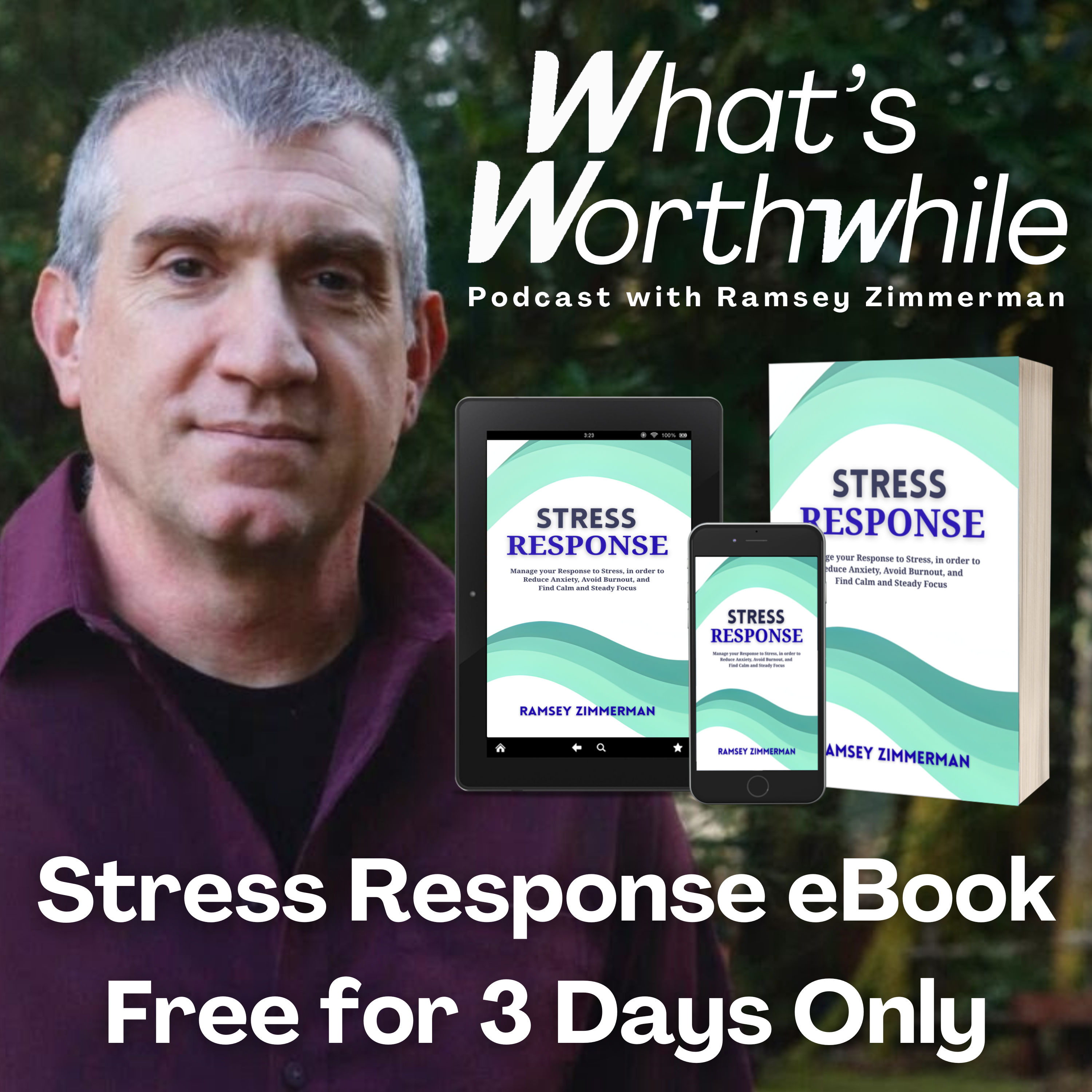
[00:20:22] Speaker B: Look, we all deal with stress. Stress is not the problem. The problem is that our body's innate stress response is built for physical challenges instead of the mostly mental, emotional and virtual stresses that we face today. In my book, Stress Response, you'll learn to manage your response to stress in order to reduce anxiety, avoid burnout, and find calm and steady focus. The ebook is available on Amazon and only 99 cents for a limited time. After you download, please don't forget to leave an honest review and rating so that others will find it too.
So tell us more about the book.
[00:21:01] Speaker A: What is the book like? How is it structured? What kind of stuff do you talk about in it?
[00:21:06] Speaker C: Yes, well, the book came out in March of 2025, so it's still fairly new.
And you know, it's fitness over 50, 60, 70 and beyond. And it's the book, it's got a lot of scientific data in it, over 200 citations.
So when you deal with a science topic, you can't just say something without having some sort of backing some sort of data that backs it. So again, I have two citations. But the big thing is this is Not a science book, it's not a biology book. It reads nice and conversational. I talk about different people in the book who, you know, I mentioned Jack Lane before, someone like him who wasn't sick until he was in his 90s, just before he died, his late 90s.
[00:21:49] Speaker A: And talk about bodybuilder, right?
[00:21:51] Speaker C: Oh, he's a big bodybuilder. He's big health. When he was a kid he didn't take care of himself. He was rambunctious kid. And then somewhere around 15, 16 years old he had an epiphany and he decided to get into weightlifting and eating right. And from there he developed a career of. He used to be on television all the time trying to teach people how to do exercises. And he had, was an entrepreneur in this, in this market space before this space really existed the way it does now.
And so he was really was a fitness guru. I believe it was 97 years old. He got sick the week before he died and he passed away.
Chuck Norris is Another one, he's 84 years old.
Another guy who's been martial arts his whole life taking care of, took care of himself, still takes care of himself. And I show examples like that of it can be done. And here are some real people that did it. Someone else I talk about too, her name is Joan Campbell. She didn't start exercising until she was 59 years old because she wanted to start keeping up with their grandkids. So she started taking up swimming and she, she won some tournaments. And then when she's, now that she's in her 90s, she's swimming 1500 meter laps in under an hour. I mean in her 90s, that's, that's quite an accomplishment. So I talk about people like that, I tell their stories as well as integrate into it different things such as nutrition, the importance of nutrition, the importance of supplementation.
I mean here, living in the United States, a lot of our agriculture strips the soil. So a lot of the soil is depleted of vitamins and minerals and so the plants don't get the vitamin and minerals. So we eat the plants but the animals eat the plants. So we eat the animals. So it's. So how important supplementation is?
Supplements such as I'll mention one CoQ10 CoQ10 is found. It's an anti oxidant important for energy, is found in the small part of the cell called the mitochondria. As we get older in our 50s, it starts to deplete.
So as you begin to lose this naturally in your body, your Body begins accelerate aging process. They've done some research that shows that it really helps in heart health as well as other aspects you take.
[00:24:11] Speaker A: I think it's statins, right? I think statins deplete CoQ10 completely.
[00:24:16] Speaker C: Yes, exactly. So that's a. It's an excellent supplement. I talk about other supplements too, which are necessary. And during the cold and flu season, taking zinc and vitamin D when it's not, you're not out in the sun. And so I talk about that. I talk about different types of diets. I don't, I don't tell anybody. This is a diet you need to eat. I explain what a vegetarian diet is, what a keto diet is, what a Mediterranean diet is, et cetera. And it's for someone to look at and get an idea. Because one thing I found in my office, there's a lot of people just want to be more healthy. They don't know how to.
So it's really. Yeah. So the book is more of a macro explanation of what you can do to get healthy. It's an introduction, mentioned the fitness page before the fitness chapter. And in the fitness chapter we talk about different types of weights and aerobic and anaerobic and hits and everything. I explain it all, I lay it all out there again so someone can take it, look at it and see how it can help them and what they might want to add to their lifestyle. And again, we talk about some things regarding testosterone. Post menopause positive state of mind is really important. Actually, it's the first chapter in the book, getting your mind right, which we talked about earlier, and writing down things and following through and following through with your journal and we'll go right through the whole gamut. And it's again, it's a conversational style book.
It's an easy read. Well, the reviews on Amazon so far have said it's an easy read, which I like, which is my tent.
[00:25:46] Speaker A: Good job. That was the goal.
[00:25:48] Speaker C: Yeah. And that was the goal. It was a two, a two year process to write this book. I was a labor of love. It's been.
When I finished the book, I had a proofread by a friend of mine who's a college professor. I then hired a medical proofreader. Make sure all the medical data is right again. If you're doing something scientific, you got to know what you're talking about. It's got to be point on and then the publisher proofread it again. So it's been proofread numerous times.
And yeah, I'm really excited about it. It's doing really well. It's one of the best sellers on Amazon.
It's in the space for fitness for those folks over, over age 50. And it's been doing well and it's been. Yeah, that's a labor of love.
[00:26:29] Speaker A: That's great.
Well, nutrition is an area that I've been recently studying. I did a, a one year program as for nutritional therapy practitioner.
And the. What's so interesting and funny is that you could sum up the entire program as just eat real food.
[00:26:53] Speaker C: Yes.
[00:26:54] Speaker A: And for, for folks who are our generation or older, it's just like, okay, we actually need to get back to not what we were eating, beginning to eat in the 1950s and 60s, which was like all the package stuff and the stuff in the cans. But we need to eat what your parents and grandparents were eating, which was actual real whole foods that were grown in the garden or come from animals that ate grass or ate whatever they grew up evolved eating.
And like you said like all those diets, there's, there's a million different diets and they all sort of have their pros and cons, but I don't think there's one sort of straight answer like there's not one perfect diet for everybody other than just eat real food.
[00:27:50] Speaker C: Exactly. I mean people have different genetic makeups, different body types of different blood types. So the difference, some people can, some people are really into the vegetarian, some people are into keto which are two extremes on aspect. But yeah, it's for people to make their choice. And like you said, what you said, I'm sure you studied in the 50s is when they began packaging. Big corporations began packaging and selling it as good food and it really was not. And as time goes on, we learned how bad sugar is. You know the bad sugar, not, not the stuff that fell in apples and ours, I think glucose fructose. But and how, how the packaging and the processing of food and the stuff that you and ate. You and I as kids and we were shoved all these different cereals, we were kids. That are supposed to be part of a fortified breakfast or part of a good breakfast.
[00:28:42] Speaker A: Yeah, part of this balanced breakfast. When you have to add like four other things to it to make it look like the sugar cereal is something that you shouldn't actually eat. Like that should be your first hint.
[00:28:53] Speaker C: Yeah, exactly.
[00:28:54] Speaker A: This whole wheat toast with real butter and a glass of milk and a glass of orange juice. Yeah. Then the sugar cereal is nutritious. Well, you could just skip this sugar cereal altogether, but.
[00:29:07] Speaker C: Exactly. But so that's what. So it's A lot of. It is A lot of what you said is just eating. One thing I mentioned too in the book is the more ingredients, the stay away from that. Yeah. Go for the less ingredients.
[00:29:18] Speaker A: Yeah. And if you can't pronounce the ingredients.
[00:29:21] Speaker C: Yeah. If you read there's a couple years ago there was a. They were selling some kind of ice cream or something on, on and they were looking at a natural ice cream versus a non natural ice cream and they mentioned they reading the ingredients and they were like locust beans.
I was like, you don't know what it, what it is. It's may not be right for you.
[00:29:40] Speaker A: Yeah, well, you gotta really watch out when it's just locusts.
[00:29:46] Speaker C: Yeah, it's true.
[00:29:47] Speaker A: Although I guess that I hear they're good with honey.
[00:29:50] Speaker C: Yeah.
[00:29:52] Speaker A: But it takes a wild character to enjoy locusts and honey. But anyway, we digress for sure.
Well, Dr. Michael, it's really fun chatting with you. I feel like we could chat all day. But how can people learn more and find you online? Where do they find you and find the book?
[00:30:13] Speaker C: Well, the first thing they could do they, if they wish to, they can go to my. My website which is doctormguad.com which d r m g u a d dot com. That's my main website and you can reach all my social medias, my YouTubes, all that with there from that, from that site.
My main social media I use is instagram and it's Dr.
Doctor dot underscore Guadagnino. Sure you'll have a spelling.
[00:30:45] Speaker A: We'll have a link in the show notes. You know, we're lucky to be able to say Guadagnino let alone spell it.
[00:30:51] Speaker C: Exactly. That's what my patients call me, Dr. G.
And my book Fitness Over 50, 60, 70 and beyond is can be found on Amazon. Just look under that title.
[00:31:01] Speaker A: Fantastic. Well, hey, thanks so much for coming on. It was great talking to you today.
[00:31:06] Speaker C: Thank you very much. I really do appreciate it.
[00:31:09] Speaker B: Ready for more? Visit whatsworthwhile.net to listen to podcast episodes. Master your response to stress by reading my book, Stress Response available through Amazon. Or to get better before burnout sets in by requesting the free guide. Regardless of where you are in your journey, I'd love to hear from you and talk about how we might move forward together. Please, please contact me, Ramsey Zimmerman through the website or on social media like Instagram, Facebook, LinkedIn or X. Thanks.