Episode Transcript
[00:00:11] Speaker A: What's worthwhile considering what we consume, believe, say and do towards peace of mind, vitality of body and joy of spirit? I'm Ramsey Zimmerman. Here's some more healthy living motivation and discussion.
[00:00:31] Speaker B: I've had some absolutely amazing experiences, particularly with kids, that I'm initially told, hey, don't be offended if my child doesn't eat any of the vegetables. They don't like vegetables. And then all of a sudden I'm noticing that they're eating everything and they eat the vegetarian lunch at the end. So I'm like, wow. I've had people contact me after the fact and say I started a garden or I'm buying more organic or my kids are now eating organic vegetables. If I tell them that they're like DAV Amy's or people start planting a garden or growing basil on their windowsill or just having a deeper appreciation for what it takes to grow really good food. I've always been a nature lover and I've always sought out my time to spend, you know, in whatever form, whether it's Martha's Vineyard or a forest up or Vermont or wherever. And I love to impart that same kind of appreciation and understanding and recognition of the magic of nature.
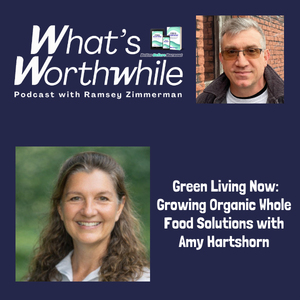
[00:01:34] Speaker A: Hey there, it's Ramsey here. That was Amy Hartshorn. Amy is a 30 plus year green living mentor, organic farmer in Vermont, and host of the Green Living now podcast. The sustainability and green living movement has grown and changed a lot over the last 30 years and it was exciting to me to get back to my roots as the green building world was where I started my whole career. Amy is very much at the intersection of green living and natural health because she grows and sells and shares nutritious organic whole foods at her family farm. I found this conversation to be joyful and familiar and inspiring and I think it will make you hungry for more. Let's dive in.
[00:02:22] Speaker C: Hey, Amy, how are you doing today?
[00:02:25] Speaker B: I am doing great, Ramsey. How about yourself?
[00:02:28] Speaker C: I'm doing really well. Thanks for coming on my podcast. You know. So you've been in this green living space for more than 30 years.
I've been or I was, or I am in that same space for almost that long.
I feel like we could probably spend the entire episode, entire time together talking about how things have changed and how they've stayed the same.
But we wouldn't want to spend the entire episode doing that. But let's at least try it. Let's start out. How do you think things have changed and how do you think things have stayed the same with this Whole space and this whole idea of green living.
[00:03:13] Speaker B: That's a great question. And I think right off the top of my head, one of the things that has changed is consumer awareness.
So back when I first discovered that there were toxic chemicals in everyday household products, I actually was pregnant and I had already figured out the whole food thing. You know, worked at a health food store, was buying organic food on a regular basis. But then after I discovered from this non toxic baby book about all these toxic chemicals and everyday household products, I thought, holy crap, how does anybody. I mean, first of all, why is this happening?
And then why isn't anybody talking about this and what are they doing to protect us and especially for baby products? And that was really concerning to me. I thought, my gosh, you know, the most vulnerable among us are infants, and particularly those in utero.
How can they get, you know, why wouldn't they at least want to protect these little beings before, you know, we get older? So I definitely have seen a shift in the numbers of people that are aware of these topics that are looking for information.
I mean, there's tons of Facebook groups now that have like thousands of people in them, you know, earthy, crunchy, mom, non toxic this and that. And I'm a part of some of them.
So that part definitely feels different than when I first started this.
[00:04:38] Speaker C: Yeah, no, I totally hear you.
When I was in the space originally starting out, I was in the area of green building practices mostly.
And so it was talking to architects and homeowners and home builders, and also talking to homeowners about, like, what's in building materials, either from, like the toxic perspective or from, you know, how much resource extraction is happening with that.
And people, I think, were just starting to think about it, and over the years, people did figure it out. Right. So that I, that, that hits home for me too. Yeah. So that being the case, like, what's the implication now? Like, if people are pretty aware of potentially all the crazy industrial compounds that could be in their products, whether we're talking about food or personal care products, is it any easier now? Is it any better now? Like, is it any less toxic now or are we just more aware of it?
[00:05:55] Speaker B: That's a good. That's a good one. So I would say in some ways it's easier because there's more options.
At the same time, though, there's also a lot more confusion. And I feel like the confusion is purposeful in some cases. I feel like, you know, the whole thing of greenwashing, which is essentially the marketing of a product that makes it sound or look healthy when it really isn't.
And I think that is alive and well, because I've seen a couple of different things happening. It used to be that places like Whole Foods had sort of the best of the best, and even some of the natural food stores here in Vermont, and I've seen a shift away from that to being more kind of inclusive of, well, let's just have everything for everybody so that they don't have to go someplace else to shop. And so I feel like it's much harder for people to figure out which products are actually better and which ones aren't, because I think there was an assumption, and probably still is, with folks that are new to this. Well, if it's in a natural food store, somebody must have vetted it and decided that it was better. Right?
And that is often not the case. And so.
So, yes, there's more choices, but there's more confusion. There's more greenwashing, really, you know, more fake.
Fake labels that don't mean anything that are, you know, luring us in.
[00:07:26] Speaker C: Well, that. And it makes me think about, you know, there were and are lots of brands that are, you know, independent third parties that cropped up who developed really great reputations for being natural or being less toxic or using, you know, being organic or using sustainable practices. But then those brands got successful, and then the major food companies purchased a bunch of those brands.
So then what happens?
[00:08:04] Speaker B: Yeah, so that's a huge thing, and that's a really good thing to call out, because there are so many formerly wonderful brands that have been bought by corporate entities. And often, you know, the formulations change, but not in any sort of, you know, noticeable way, unless somebody's paying attention. I mean, I'll give you a small example. So Ben and Jerry's, when it used to be Ben and Jerry's, before Unilever purchased it, they actually had two flavors that were organic.
And you could go to their Waterbury location and have a fun tour, and you'd see organic cotton T shirts in the store.
And then those all disappeared. And I also noticed that the taste of the ice cream just didn't taste that good to me anymore. It felt like they were really, you know, sacrificing quality ingredients.
Even if it wasn't all organic before, when it was Ben and Jerry's, it just tasted better, you know, And I mostly eat organic, and I do like to enjoy other things at, you know, at times, because I feel like 80% of the time, at least, I'm eating really well, and so, you know, I'm going to be a part of the world and have some fun stuff like ice cream.
Yeah. So that's, that's a big issue. And I know that, you know, companies like Stonyfield Yogurt, when they were bought out by Eldenon or Dannon, Gary Hirschfeld really was adamant about keeping the integrity of that company. Now, I haven't really followed it to see if that has continued to be the case, but I knew originally it was, it seems like seventh generation maybe has kept to their, you know, their commitments to consumers even with the new. I forget if it's Procter and Gamble or whoever it is that owns them, but I would say it's much harder to find independent organic food or household product companies anymore. Like Aubrey Organics was one of the best, you know, for shampoos and creams and makeup and all that stuff. And they, you know, unfortunately went out of business.
And yeah, it's, it's tough in that respect.
[00:10:13] Speaker C: But then I also think of it from a different perspective, which is that realistically the best way to get those products into the hands of as many people as possible is for them to be bought out by the companies that have the infrastructure and have the manufacturing reach and capabilities and distribution.
[00:10:38] Speaker B: Yeah.
[00:10:39] Speaker C: So if not that, what do you do?
[00:10:43] Speaker B: Yeah, that's a good question because I absolutely agree with that. And I also am aware of the fact that, you know, if you've built up a company that's really successful and you're just tired and you want to do something else with your life, you should be able to sell it. Right. And you obviously want to get the best price for it.
So I totally get that. I think it's kind of a mixed bag, you know, I mean, I look at the big corporate companies that are selling both organic and conventional, whether it's bananas or, you know, whatever product.
And I always wonder, first of all, is that sticker on the right banana? Right. Is that organic? Really organic?
[00:11:25] Speaker C: Is it the sticker that's organic or is it the banana that's really.
[00:11:28] Speaker B: Right, right. And how do we know that it hasn't gotten confused or that there hasn't been drift from the non organic banana? You know, so there's so many questions that I, I have about big corporate entities, especially big AG or big Pharma.
So for me that means I trust less and I'm more inclined to seek out the small, you know, mom and pop type companies, which is the same thing. I mean, you know, we own and run a certified organic Farm here in Vermont.
If I'm someplace else, I'm going to go for another certified organic small farm as opposed to some big, you know, mega organic farm.
I just feel like there tends to be more integrity and more following the rules and really having the ethos of wanting to do the best possible job with the least amount of. Well, in the case of organic, you don't want any toxins, really.
There's certain natural substances that are toxic to bugs, but not to humans. So, yeah.
[00:12:32] Speaker A: Here on what's worthwhile, we've spoken a lot about burnout and why it's important
[00:12:36] Speaker C: to avoid avoid it.
[00:12:37] Speaker A: So now let's talk about burnout resilience. Burnout resilience is your capacity to handle stress without losing your clarity, your energy or your sense of purpose. It is the ability to recover well, stay steady under pressure and keep moving forward when life gets demanding. And the good news is it can be built by strengthening the foundations of holistic health. I created the Burnout Resilience Zone assessment to help you see where you stand and which foundations may need attention. It takes just a few minutes and gives you a personalized breakdown with clear recommendations. Go to burnout.whatsworthwhile.net and learn which zone your burnout resilience is in.
[00:13:19] Speaker C: Well, tell us more about your organic farm in Vermont.
[00:13:24] Speaker B: Sure.
[00:13:25] Speaker C: What do you grow there and who comes to see it? And.
[00:13:29] Speaker B: Yeah, so I live in the Mad River Valley of Vermont, which is central Vermont, near Sugarbush Resort. And we tend to have a mix of locals that come to the farm stand as well as a lot of visitors. So.
Oh, wow. Spider just dropped down from my lamp.
[00:13:46] Speaker C: Is it an organic spider?
[00:13:48] Speaker B: I'm sure it is because there's no spraying going on in this household.
So, yeah, so we grow a whole bunch of different vegetables and a few fruits. We have strawberries and blueberries and melons, flowers and maple syrup. My husband is a fifth generation maple sugar producer.
[00:14:07] Speaker C: Wow.
Yeah, that's exciting. And so we were talking about, like distribution and labels and companies and stuff. How do you get to market? How do you sell?
[00:14:19] Speaker B: So initially when he started, he was the main farmer at the farmer's market, which we have a very robust and popular farmers market.
The problem was, is that, you know, because he knew marketing and he knew he had to make a big showing at the farmer's market. He would get up at 2:00 in the morning, pack his truck, go set up, then sell from nine to one. And then whatever was left, he would drag it back to the farm stand. Well, so what ended up happening was that the farm stand kind of got second shift or what's the word I'm looking for? It didn't get taken care of as well as it should have. So, for example, Fridays a lot of people would come in and say, well, I'm not going to the farmer's market this weekend. Can I please buy, you know, 12 years of organic corn? And you know, he would be really stuck because he, he wants to give the customer what they want. But at the same time he knew he had to hold back, you know, in order to have a big showing. So, so we finally, after, let me see, we've been together for almost 17 years, so I think it was about eight, maybe 10 years ago actually that he stopped doing the farmers market. And part of that was because there were other farmers that were there. And so people felt like they should just sort of share the love between everybody. So he wasn't making as much money there as he had been. And we focused all of our intention, attention and intention on the farm stand. So we built a second building, really beautiful post and beam, open air and have, you know, continually sort of upgraded that experience and focused all of our intention and attention there. And so that has increased sales dramatically at the farm stand. And we also, you know, did things like get credit cards and, you know, better refrigeration so that it was more visible and fully staffed instead of the honor system, which we often did back in the old days. And, and I started doing these really cool food and farm tours. I think this will be my seventh season where I bring people through the organic farm to talk about what is organic, like, what does that mean? And they really are tasting their way through the field. So plucking green beans and eating them or cherry tomatoes or chewing on kale. I mean, I've had some absolutely amazing experiences, particularly with kids that I'm initially told, hey, don't be offended if my child doesn't eat any of the vegetables. They don't like vegetables. And then all of a sudden I'm noticing that they're eating everything and they eat the vegetarian lunch at the end. So I'm like, wow, this is pretty cool.
So just bringing people on for experiences we've had. You know, we used to do four food festivals a year. We had farm to table dinners. I did kids camps for three years. I mean, we really tried to make it be sort of a, a mecca for people that want to be inspired and educated and entertained and fed really well, like to, to know the difference between Good quality food.
[00:17:22] Speaker C: No, that sounds wonderful. You made it a destination.
[00:17:25] Speaker B: Yes, thank you. That's the word.
[00:17:27] Speaker C: Yeah, that is the word. That's a. It's a great way to bring people to you.
[00:17:32] Speaker B: Yeah, yeah, we even got on hgtv actually did.
[00:17:35] Speaker A: Yeah,
[00:17:38] Speaker B: it was, they did one of those, they built one of those multimillion dollar houses and then, you know, it was a contest to see who would win it. And so they were trying to promote the area and they found out about the tours. And so we had a really fun, you know, experience with the host that went with us through the farm. And then I made a pizza lunch for him from our flatbread pizza oven.
[00:17:59] Speaker C: Very cool. Yeah, good stuff.
I bet that the people who come out and visit your farm and take those tours and do those things, I bet they really enjoy that and that's probably good for their health and wellness in all kinds of ways. And you know, I think about, I think about how
[00:18:25] Speaker A: especially
[00:18:27] Speaker C: around the, you know, 10, 20 years ago, we were really lamenting this whole idea of like just a consumerist society.
And I don't hear that phrase thrown around quite as much anymore, but I wonder to what extent it's still true. And the reason I bring that up is because it seems like having hands on kind of experiences like you're describing gets people away from just being a consumer.
[00:19:01] Speaker B: Yeah.
[00:19:01] Speaker C: So I'd love to hear your thoughts around the notion of, you know, consumption, consumerism and, you know, is it much more meaningful to people when they understand like, where their food is coming from and they're starting to participate in like the creation of their food and. Yes, you know, what's that like?
[00:19:23] Speaker B: Yeah, I think I would use the term conscious consumers.
And so what I've noticed is that people will often leave the experience on the farm telling me a number of different things, surprisingly, even after 90 minutes to two hours. And usually it's, you know, the folks that have had the whole experience where they get the tour on the organic farm, the maple sugar house. Then we have actually a, a big half acre hydroponic greenhouse at the back end of the farm, which my husband started with two other partners and we since sold his share six years ago. But I still am able to bring people in there and then even bringing people up to my house gardens because I love to have my own gardens, even though we've got this farm.
But people will tell me that the experience has been life changing. And I used to think, how is that possible? You know, in two hours somebody's actually having a life Changing experience. But I really feel like that is true for a lot of people. And, you know, like, I've had people contact me after the fact and say, I started a garden or I'm buying more organic, or my kids are now eating organic vegetables. If I tell them that, they're like Dave and Amy's or, you know, people start planting a garden or growing basil on their windowsill or just having a deeper appreciation for what it takes to grow really good food. And I think one of the things that sort of surprises people, and I always ask them, I want to kind of get a sense of where they're at when they arrive. So I'll say, well, so, you know, what do you know about organic? And nine times out of 10, they'll say, oh, no toxic pesticides. And I'll say, yeah, that's definitely one of the pieces. And then I focus on the fact that it's really about growing a healthy soil that's alive with all these microorganisms that are breaking down the organic matter that is then feeding the plants. And, you know, the more I've gotten into things like mushrooms and mycelium and, like, the connections that are happening underneath the soil between the plants and the trees, and it is just so magical. And I feel like I love to share that magic with people, you know, that I. Even though I grew up in New York City, of all places, I've always been a nature lover. And I've always sought out my time to spend, you know, in whatever form, whether it's Martha's Vineyard or a forest, a. Or Vermont or wherever.
And I love to impart that same kind of appreciation and understanding and recognition of the magic of nature and how we can learn so much from it, you know, and then the more we pay attention to it and the more we live in harmony with it. And I had a fascinating conversation this past week's podcast on Friday. This guy is a mushroom forager and forest educator, and we were talking about the difference between sustainable and regenerative.
And typically, sustainable means you take what you need, but you put back that amount, right?
And he was talking about sort of the responsibility of actually generating more than what you take. So the whole idea of regeneration. So he gave a great example of harvesting for something called lobster mushrooms, which are these really interesting mushrooms that taste like lobster, surprisingly. And he said if he goes to a patch in the woods and he sees a bunch, instead of thinking to himself, okay, I can take one out of 10, he thinks, okay, I'm going to take. Let's say two and one of them, I'm going to take the top off, keep the stem with the roots, and go find a similar kind of locale that has the same type of slope and conditions and plant that to start a whole new bunch of those lobster mushrooms. And I just thought, wow, that is such a cool concept of thinking about regeneration as a way to increase the abundance for everything.
And yeah, so that, that really was such a cool little sort of aha moment that. That popped in.
Yeah.
[00:23:28] Speaker C: You know, the.
That whole notion of sustainable.
When I went to college, I was a student of William McDonough and one of the things that he used to like to say was, if I asked you how was your marriage and you said, oh, it's sustainable, you know, is that what you want? Is that what you're looking for?
[00:23:48] Speaker B: Right.
[00:23:49] Speaker C: And making the whole point that you. You do actually want it to be restorative or regenerative and beyond just sustainable. Because sustainable is like, you know, just hanging on.
[00:24:03] Speaker B: Yeah. The bare minimum.
[00:24:05] Speaker C: The bare minimum. We can continue like this.
[00:24:08] Speaker B: Right.
[00:24:09] Speaker C: But it doesn't mean that it's making it any better or more pleasant.
[00:24:13] Speaker B: Exactly.
[00:24:16] Speaker C: The whole kind of sustainability movement or something I was very, you know, much into personally, professionally.
There's always sort of a dynamic tension or there was always sort of a dynamic tension that I experienced in that.
Because part of it was, you know, we're having. And we're finding we're talking to individuals, we're working with them to have to make changes within their life and within their experiences. But it was always difficult to see or even imagine how those changes could be brought to scale, you know, so that our entire society or our entire population could experience things sort of as well as we can have with individuals.
[00:25:14] Speaker A: Look, we all deal with stress. Stress is not the problem. The problem is, is that our body's innate stress response is built for physical challenges instead of the mostly mental, emotional and virtual stresses that we face today. In my book, Stress Response, you'll learn to manage your response to stress in order to reduce anxiety, avoid burnout, and find calm and steady focus. The ebook is available on Amazon and only 99 cents for unlimited time. After you download, please don't forget to leave an honest review and rating so that others will find it too.
[00:25:51] Speaker C: And then, you know, there's just the whole notions of populations and population growth and, you know, we got into all kinds of things with climate change.
[00:26:05] Speaker B: Yeah.
[00:26:06] Speaker C: You know, we talked a little bit already about how you scale products, you know, and the example used before was like, Niche products being bought out and becoming, you know, purchased by mainstream products.
But then there's the other question is how do you grow enough food to feed the world? How do you grow enough food to, to feed entire populations, especially as populations continue to grow? So what do you think about that in terms of like, agriculture that can feed the world in healthy ways?
[00:26:45] Speaker B: I have a lot of thoughts, actually. I think that this idea that we need genetically modified seeds or chemically intensive agriculture, or even the monocrop that, you know, which is growing one crop over acres and acres of land, I think is really an outdated mindset. And I say that because now, you know, one of the things that I love to see and encourage is people growing their own food, no matter how small of a scale that is.
And so the idea of, of empowering people, you know, and not just shop at the grocery stores, but to find farmers markets or trade with neighbors or grow something on your patio or windowsill, or if you have land, great, that's even better.
And the advent of technology like hydroponic, which, you know, there's chemical hydroponic and there's sort of more organic hydroponic. And I'm definitely an advocate of the organic version, which is what, you know, what has been done at the half acre site that I mentioned at the back end of our property that has enabled people to grow food in places that would never have been able to grow food. You know, where the, maybe it's a desert, but there's some kind of salt water nearby and they can desalinate that and use that. And it's, it's a closed loop system too. So, you know, you have water for those that don't know. Hydroponic is basically growing in water with, with a nutrient solution as opposed to growing in the soil.
Now there's, there's a kind of a raging debate about whether or not that's really healthy, you know, versus the way soil grown has always been, you know, revered, which I think is important.
But I don't think we're just stuck with one choice. I feel like, you know, we can diversify just the way nature is. And so one of the ways of diversifying is having hydroponic even in your own home. Like, I have a little homeowner size hydroponic system that I'm, I just started growing cherry tomatoes, lettuce and cucumbers so that we can have fresh stuff for our salad that I don't have to buy at the store because I know that at the store at this time of year, In February, it's like at least a week old, you know, if that.
So I think it's about, you know, looking at how to make choices that are more around that regenerative perspective instead of the extractive like.
And there's so many negative implications of the way that we've been doing it with this large scale chemically intensive. I mean, if you just take a look at the, the, the amounts of sickness in this country that, you know, Americans have and the numbers of pharmaceutical drugs that the average person is on and it's really overwhelming. And you, and we know that our food is our medicine.
[00:29:36] Speaker C: Yeah.
And it sort of makes the point that no one can do everything, but everyone can do something.
[00:29:46] Speaker B: Oh, that's a good way of putting it. Yeah.
[00:29:49] Speaker C: And maybe you're not going to get all of your vegetables from your home hydroponic garden, but you can certainly get some and you can grow some herbs and you can grow, you know, some fast growing things like lettuce, which you mentioned.
And really in my mind there's nothing better than a cherry tomato that is warm from, from the sun. And the plants like those are just candy to me.
[00:30:18] Speaker B: Absolutely.
[00:30:19] Speaker C: Stem and this, you know, we talk, I talk a lot in my podcast about nutrient dense whole foods and the, you know, probably one of the best ways to get nutrient dense whole foods is to grow them yourself.
[00:30:43] Speaker B: Yes, indeed.
[00:30:46] Speaker C: There's people, probably many people have limitations in terms of, you know, how much they can grow. You live in a city, you don't have a yard.
You know, talk to us some more about, you know, you have some ideas. It sounds like you have a little kit to when that you're, you in fact were describing and using something that, you know, you grow stuff in. Like what if people don't have a lot of space? What are some thoughts around how they can grow a little bit for themselves?
[00:31:18] Speaker B: Yeah. So, you know, if you have a sunny window, that's great. If you can get 8 hours of sun in that window, then you can grow a number of different things. The thing that's really cool though is even if you don't, if you have a dark apartment somewhere with grow lights, you can grow a lot of stuff. And so, you know, I mentioned the little hydroponic system that I have. It has, I think like 15 or 18 little spots for the plant seedling, which I use something called Rockwool to hold that seedling in place, which also keeps the moisture, you know, keeps the water absorbed.
But I'm also, I also have extra lettuce seeds this time because they poured out of the bag and get them back in. So I have all these little lettuce sprouts that I'm going to actually put into a seed tray with, you know, just a small amount of soil and you can grow, you know, on a sunny windowsill that way. So yeah, there's so many different ways now that we have more options and grow lights are an amazing advent. I mean, I prefer the sun, but if you don't have access to the sun where you live, then, you know, get full spectrum grow lights.
[00:32:29] Speaker C: Wouldn't it be nice if we could solve problems sort of together and you know, add an individual and home and community level as opposed to having to have just giant industrial solutions?
[00:32:44] Speaker B: Yes, yes. And I actually want to throw in another thinking of giant industrial solutions.
This whole advent of lab created meat and plant based meat in quotations and you know, some of these wealthy individuals that are promoting this type of technology as some sort of answer to how to feed the world.
And to me it is the absolute opposite of what we want and opposite of what we have been talking about here because it's chemically intensive, it's expensive, it's extractive, it's big factories using all sorts of electricity. I mean, one of the things that's really disturbing is to see kind of tangentially the data center concerns that are happening. The more of us that are using ChatGPT and other AI and whatnot, all of these different giant data centers that are showing up near people or in people's communities, taking the water, charging the ratepayers for the electricity, that kind of stuff I think has to stop. You know, why should we, the, the average person be footing the bill for these mega companies that are, you know, making so much money by utilizing all of these resources that don't belong to them, but they're not paying for them. So I think it's.
Yeah, I think there's a whole different mindset that needs to be adopted. You know, there's still seed companies making money selling seeds. There's still, you know, compost companies or soil. You know, you can buy a bag of organic soil, you can buy the hydroponic unit, you can buy the lights, all of those things, you know, somebody has to sell.
So there is still an economy to be made from, from small scale, you know, homeowner size stuff.
Yeah, yeah.
[00:34:38] Speaker C: And I think we, we kind of keep coming back to that and it, I see and think that.
Distributed smaller kinds of economies are wonderful.
[00:34:54] Speaker B: Yes.
[00:34:55] Speaker C: Because they, you know, do local development and they empower people to not just be consumers, but to be themselves, producers.
[00:35:08] Speaker B: Yeah.
[00:35:10] Speaker C: And people are more interrelated and it creates much more diversity and it helps local areas to lean into their individual expertise and use whatever, you know, flavor of resources and their culture.
So yeah, I just love distributed solutions instead of centralized solutions.
[00:35:41] Speaker B: Well, and I think, I think it goes back to something that I think we were starting to talk about a little bit, but this whole idea that we're all connected. So that's something that I've become more and more aware of the more that I've gotten into this whole green living adventure is the idea that what choices we make actually have an impact on the whole.
And that's actually powerful for us because look what happens when consumers boycott a company because they don't like something that that company is doing. That can have a huge impact.
And I think that, you know, the more we share information, become more aware and gather together and make a vision for a healthier world for everyone, including the natural world that we are so lucky to have, the better it will be. You know, I think if we step out of this whole extractive profits over health kind of mentality that seems to have dominated then, then we'll be much better off.
[00:36:50] Speaker C: Yes. If people want to find you online, if they want to come visit your farm, if they want to buy your produce, how do they find you? How do they get a hold of you?
[00:37:01] Speaker B: Yeah, the easiest way is my website, which is greenlivingnow.com and I have some online courses. I'm actually shifting the platform for them, but I also have some retreats coming up this summer for women recalibration retreats for a weekend or three nights and four days. So that will be on the website. And fun things like I'm developing a.
Your non toxic kitchen reimagined like a five day kind of intense online experience which will kick off with an, with a live piece to it on Zoom. So all kinds of things just to help people, you know, get into this world of living a less toxic, more eco friendly and holistic life. Because I'm all about, you know, choosing holistic health strategies that help us stay healthy, prevent illness or even reverse that. Oh, and the podcast, right, that's on, on YouTube and also all the big podcast platforms. It's called the Green Living now podcast.
[00:38:02] Speaker C: Awesome.
Well, hey Amy, it's been really great spending some time with you talking and I'm sure we'll get a chance to do it again. And, and yeah, thanks a bunch.
[00:38:12] Speaker B: Oh, my pleasure. It was a lot of fun.
[00:38:14] Speaker A: Ready for more? Visit whatsworthwhile.net to listen to podcast episodes. Master your response to stress by reading my book, Stress Response, available through Amazon, or to get better before burnout sets in by requesting the free guide.
[00:38:30] Speaker C: Regardless of where you are in your journey, I'd love to hear from you
[00:38:33] Speaker A: and talk about how we might move forward together. Please contact me, Ramsey Zimmerman, through the website or on social media like Instagram, Facebook, LinkedIn, or X. Thanks.